JAZZ BASS
FROM TECHNIQUE TO CREATIVITY
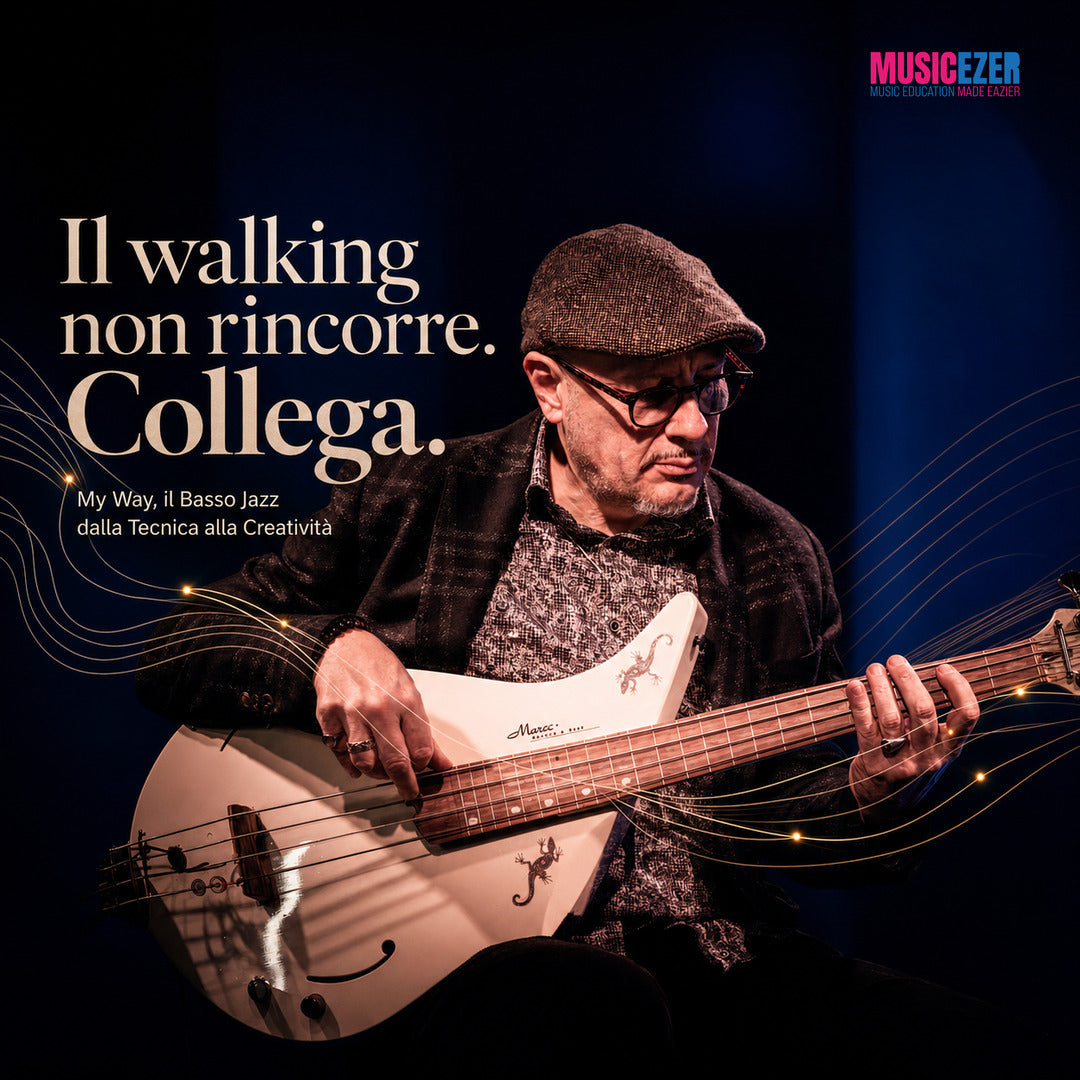
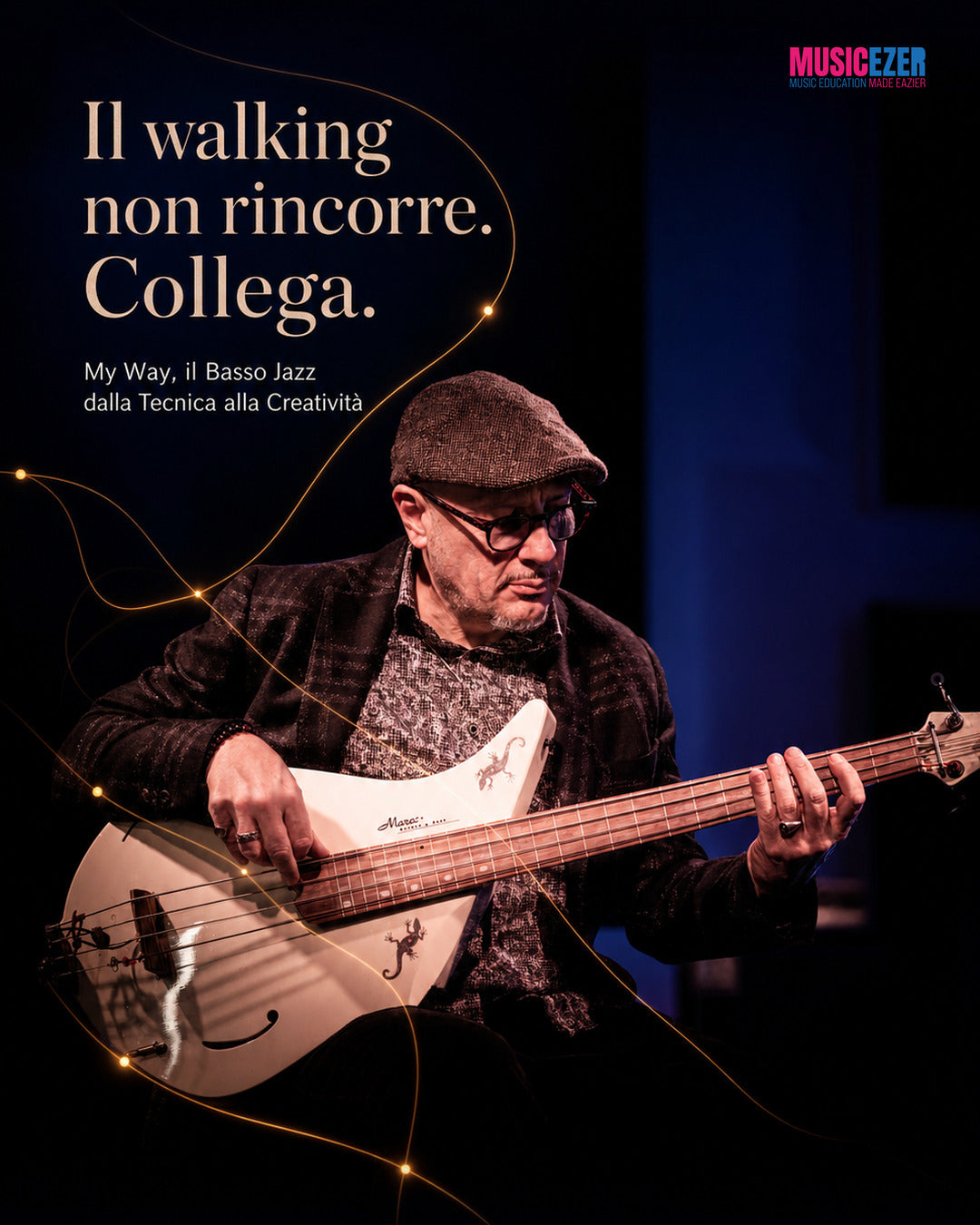
10 lessons with Dario Deidda to bring new life to the strings of your bass.
Technique as a bridge toward expressive freedom. A method that works on electric bass and double bass alike, from walking to solo.

Subtitles available in 🇮🇹 🇺🇸
Without a technical foundation, in jazz you can't hide.
Three things that happen to nearly every jazz bassist, at least once. Often all three.
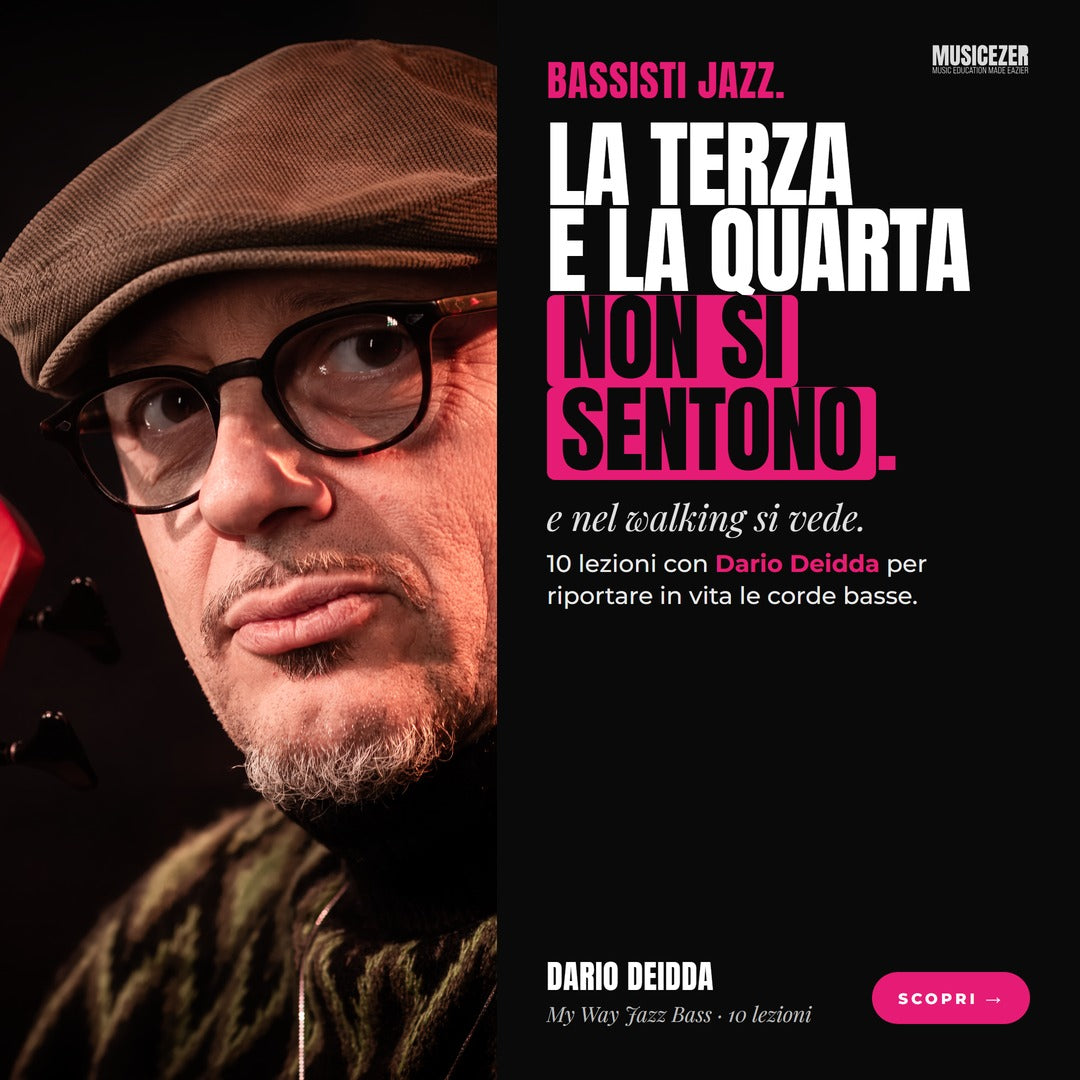
The 3rd and 4th strings get lost
You tend to play legato on the fourth string, you tend not to have a clean attack on the third. On the low strings the walking exposes you first: wherever you try to hide, the ear senses the sound dropping. It's not a volume issue, it's a quality of playing issue.
The walking is a chase
Going straight to the roots gives the music a color that's too schematic, too rigid.
The walking becomes a struggle. A chase.
Not a pleasure, not a melodic line, not an artistic contribution to the band's rhythm section.
You only improvise what your hands remember
You've studied scales, patterns, licks, bebop transcriptions until you're bored. You know the theory.
And yet when you improvise you only ever play what your hands remember, not what your ear would like to hear, not what you have in your head.
The technique is there. The freedom is not.
"Study the technique, then forget it. To reach through it the heart, yours and that of those who listen."
Dario Deidda
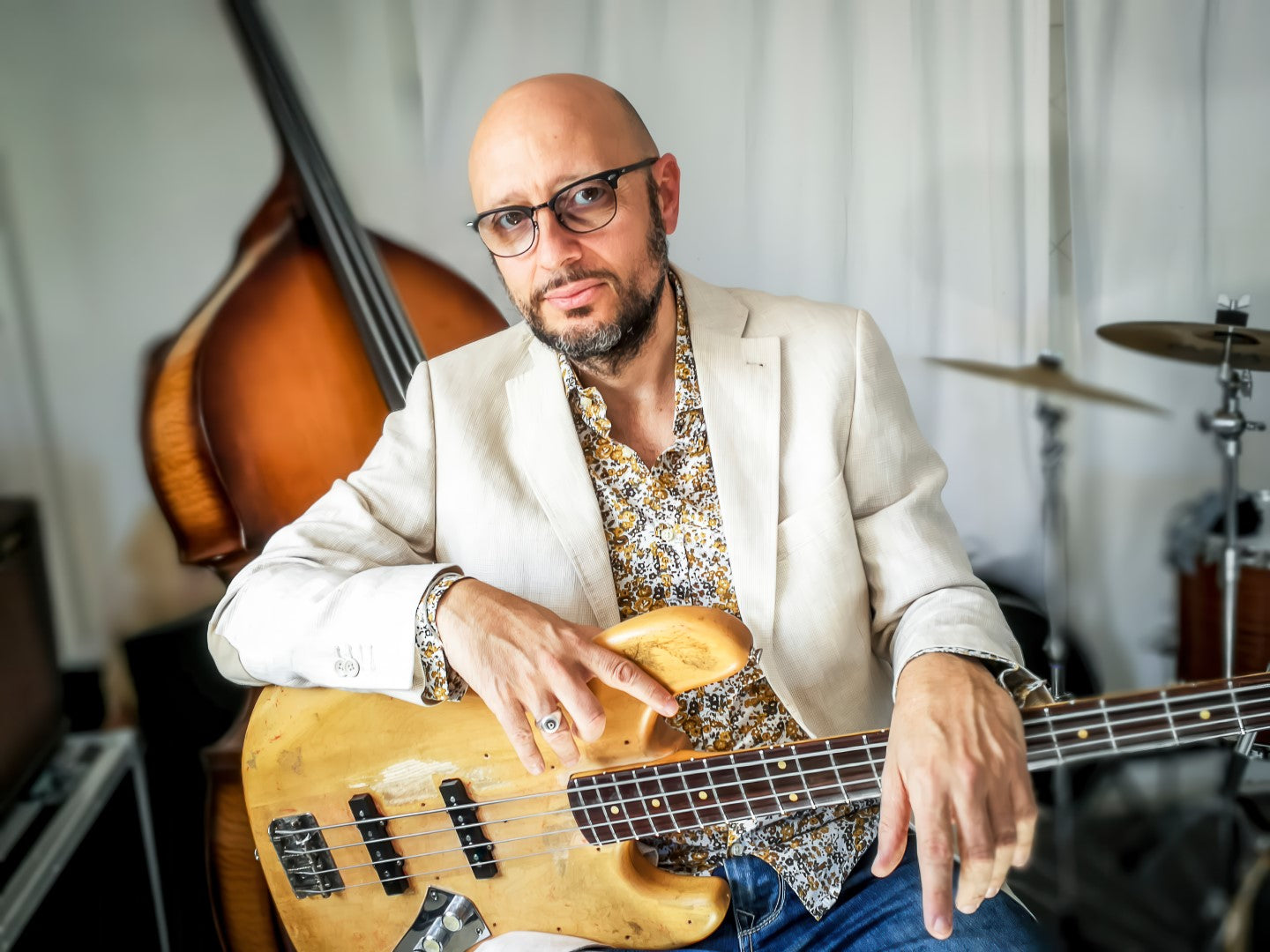
The bridge between impeccable technique and improvisational freedom
Five things that change when the foundation isn't just study, but a conscious choice.
-
Same sound on every stringThe 3rd and 4th strings stop being the weak point: they have the same sound quality, the same weight, the same intention as the others. Walking and improvisation finally hold up everywhere.
-
Left hand: the thumb is a lever, not a constraintThe correct setup that removes tension, frees up speed, and lets you control note length. Rhythmic clarity is born from physical control, not just musical taste.
-
Walking as a melodic line, not a chase of notesChromaticism, the second degree as a space of freedom, melodic choices. The walking stops being accompaniment and becomes art.
-
Modified pentatonics like John ColtraneChange one note, you get a different sonority. That's what Coltrane was doing on substitute chords. It opens improvisation to a harmonic language that goes beyond the textbook pentatonic.
-
The ear leads. Technique follows.Improvisation isn't memorized scales and patterns. It's a language. Technique serves to free the ear, not to control it. When the foundation is solid, you play what you hear, not just what your hands know how to do.
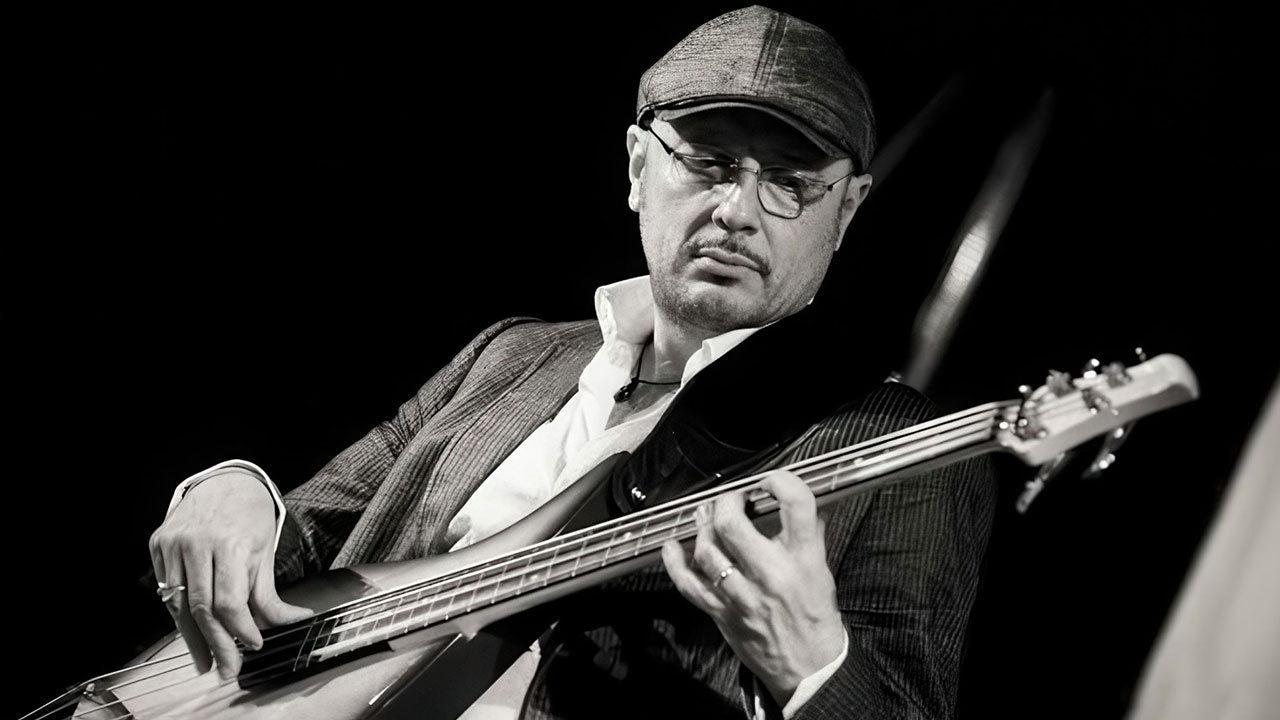
8.778+ 8,778+ musicians study on Musicezer
Here's what those who've already started Dario's course are saying.
Two real excerpts from the course
To get a first small taste of the course.
If the quality of these "tastings" convinces you, imagine ten full lessons.
Ten lessons, from the fourth string to the heart.
It's not a method from scratch. It's Dario's personal path for those who already play bass (electric or double bass) and want to understand why their technique isn't yet their voice.
10 lessons • ~2h of video • PDF booklet with transcriptions

Who this course is for. And who it isn't for.
Start here: DOUBLE BASS MASTERY - Jacopo Ferrazza →
What you need: BIG BASS THEORY - Giorgio Terenziani →
DOUBLE BASS: INSTRUCTIONS FOR USE - Ares Tavolazzi →
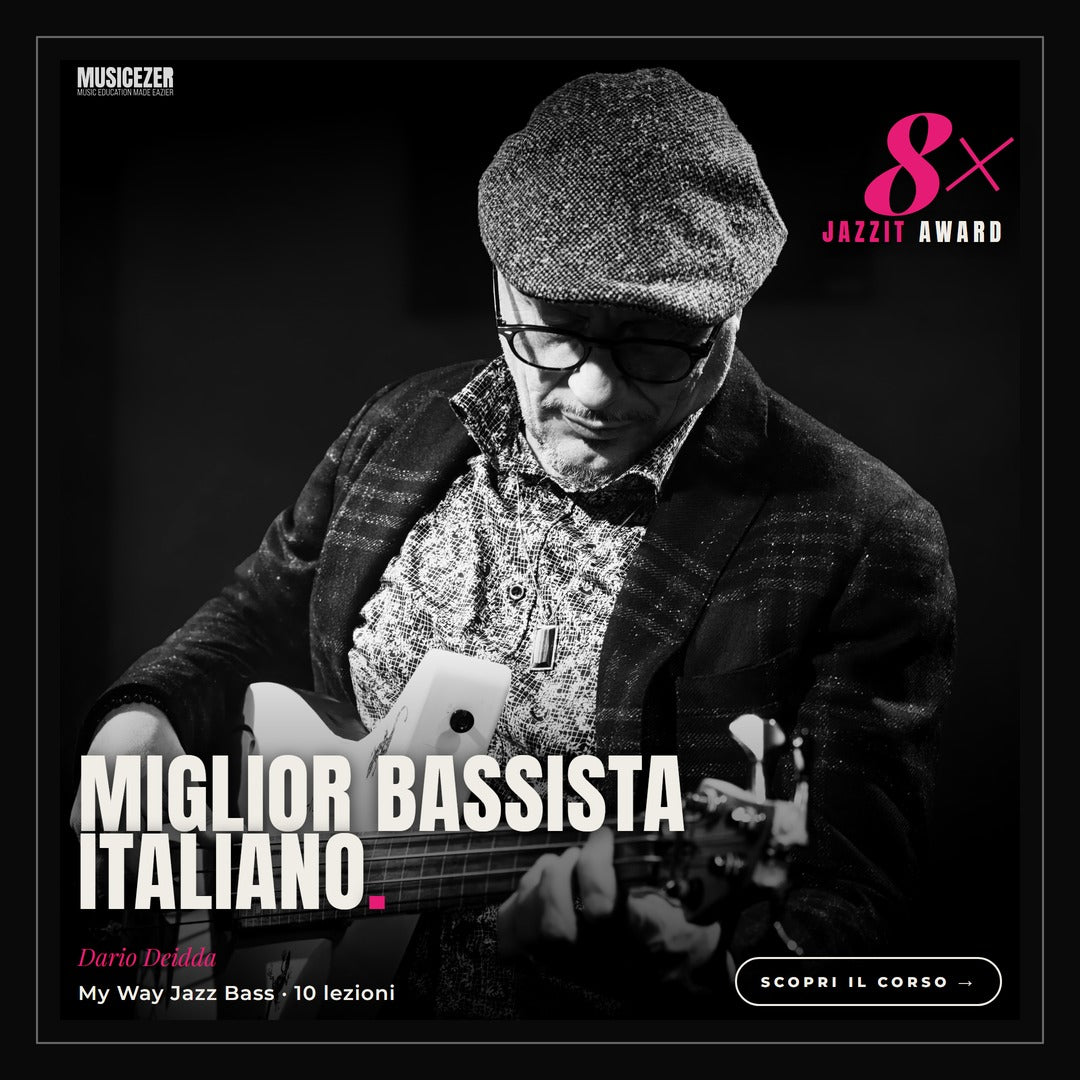
8 Jazzit Awards, inside ten lessons
Single payment, lifetime access, 30-day guarantee. No subscriptions.
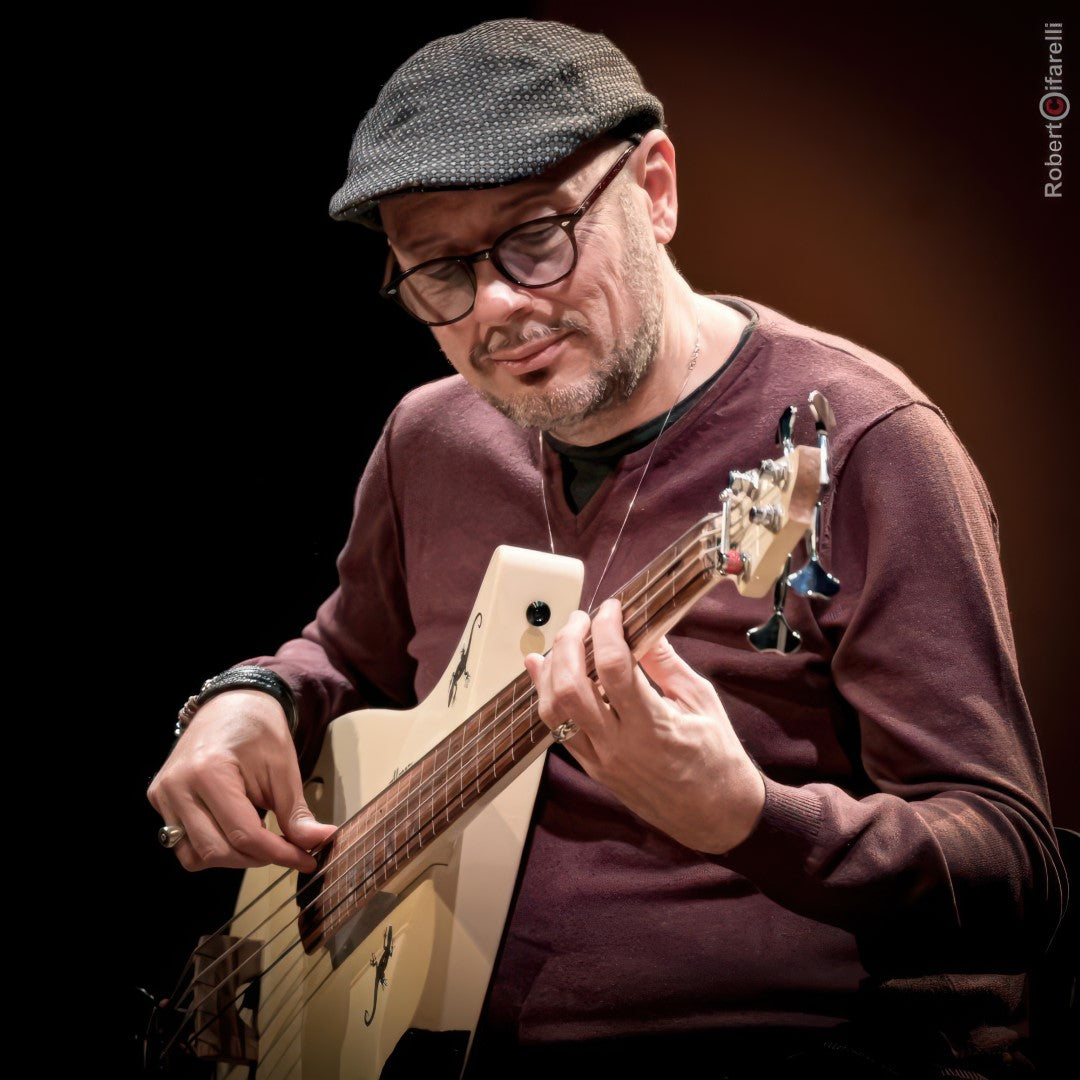
Considered one of the best Italian bassists in the world
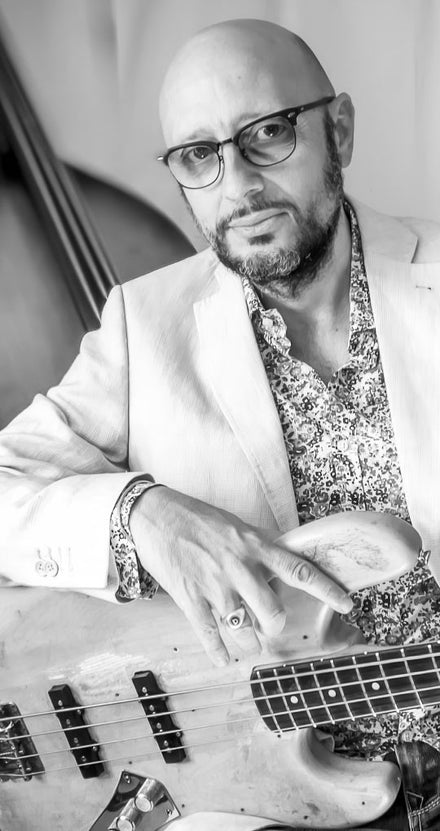
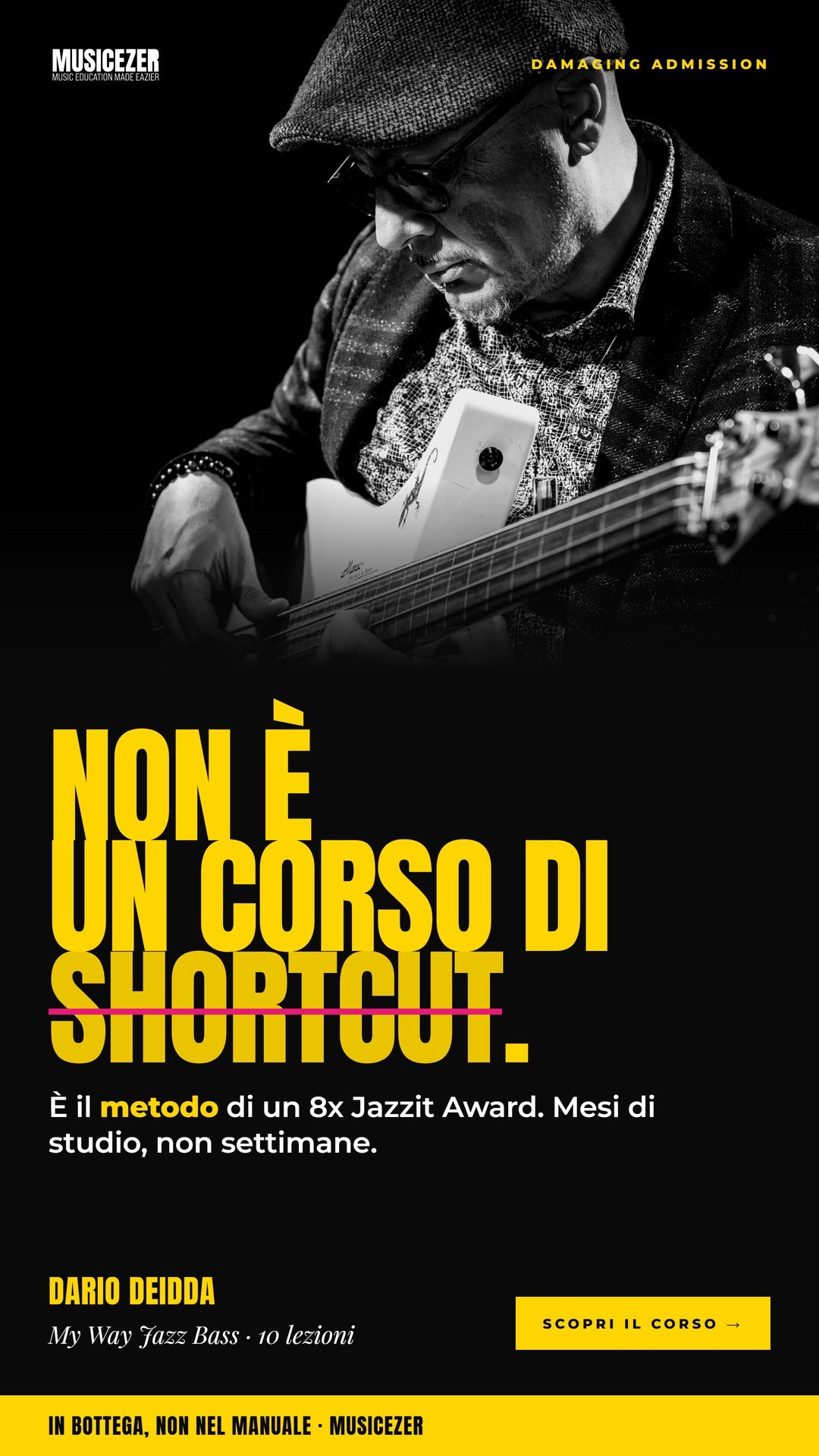
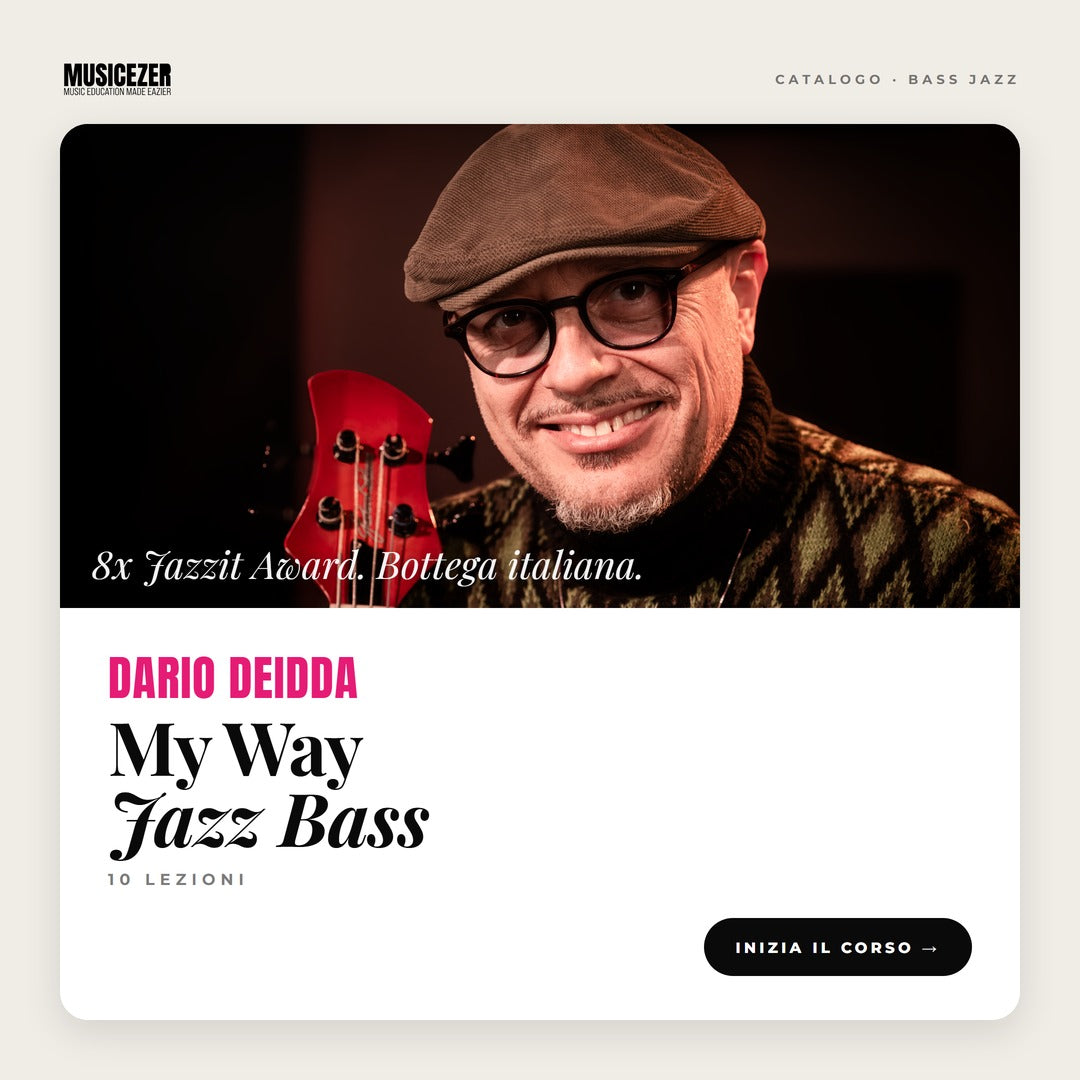
8 times Jazzit Award winner as best Italian bassist. Bassist of the Kurt Rosenwinkel Standards Trio and Quintet with Mark Turner and Marcus Gilmore.
- International collaborations: Marcus Miller, Vinnie Colaiuta, Michel Petrucciani, Benny Golson, Randy Brecker
- Italian jazz and pop: Pino Daniele, Fiorella Mannoia, Enrico Pieranunzi, Danilo Rea, Tullio De Piscopo, Carmen Consoli, Elisa, Max Gazzè, Niccolò Fabi
- Classical double bass diploma at the Salerno Conservatory, then a jazz career built step by step
How you'll truly learn, and for good
Direction
Camera angles chosen by videomakers who are also musicians. The 4K multicamera footage brings you to the center of the lesson, almost as if you were there: at home, but with the teacher next to you.
Booklet
Note-by-note transcriptions of jazz standards, three solos of progressive difficulty, all the exercises seen in the course. Printable, to keep always next to the bass.
Yours forever
Once you've bought it, the course is yours forever. You follow it at your own pace, rewatch it as many times as you want, come back to the content whenever you need to. No limits, no deadlines.
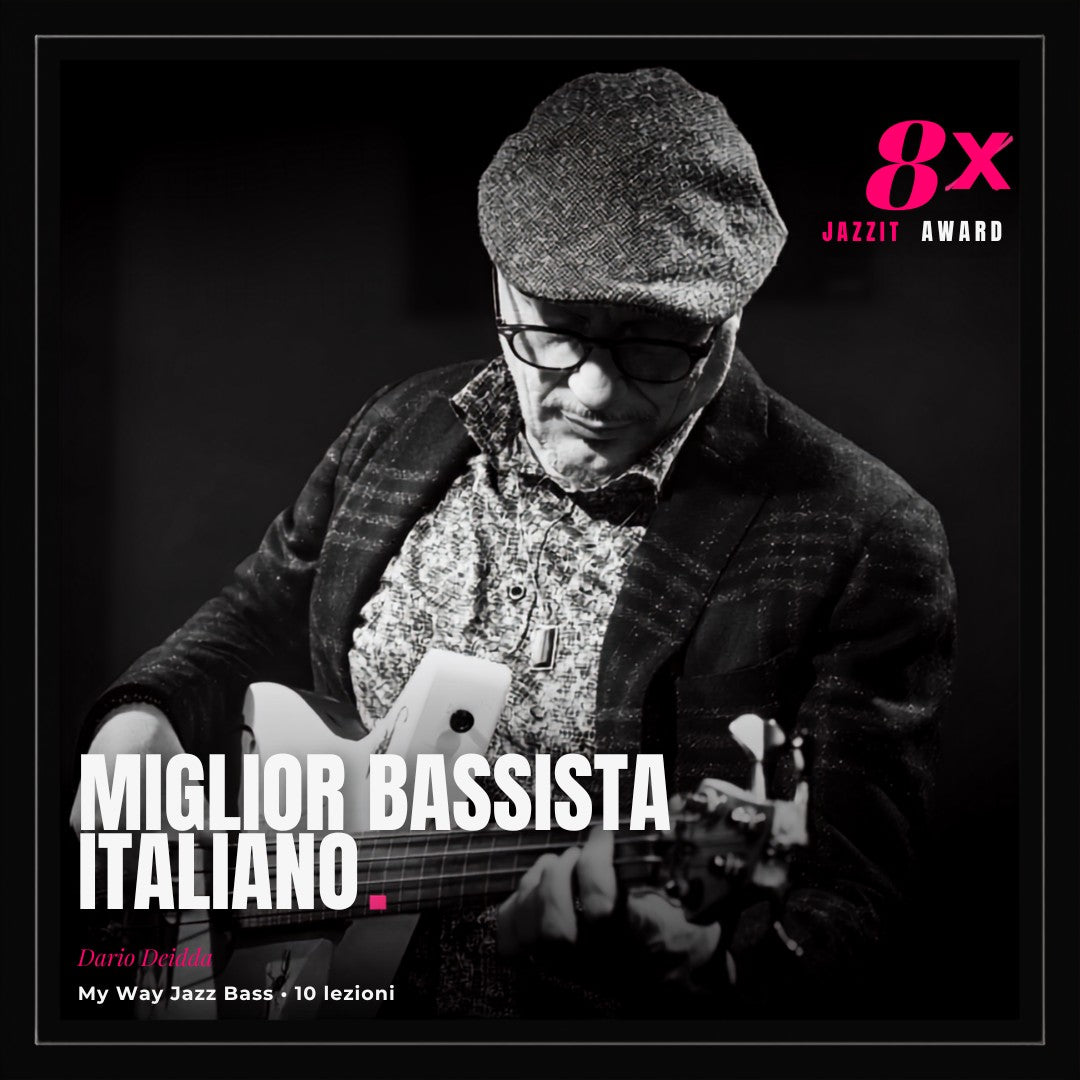
Everything you get when you join the course
Single payment. Lifetime access. No auto-renewal.
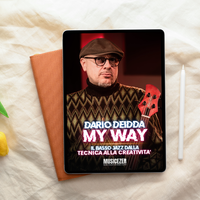
PDF booklet, 57 pages
Jazz standard transcriptions, 3 solos, all the exercises, printable.
39 EURThirty days to really try it
If you don't see measurable changes in your playing, we refund you. All of it.
We want you to take the course seriously, we don't want your money if the course isn't actually useful to you.
The questions we get before purchase
After Deidda, the next step
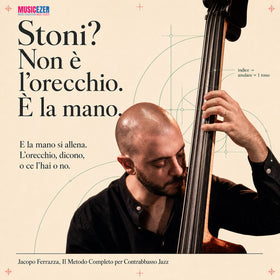
DOUBLE BASS MASTERY - Jacopo Ferrazza
Is double bass your passion? Jacopo Ferrazza offers you a method structured from A to Z, academic and systematic, for modern jazz double bass.
€139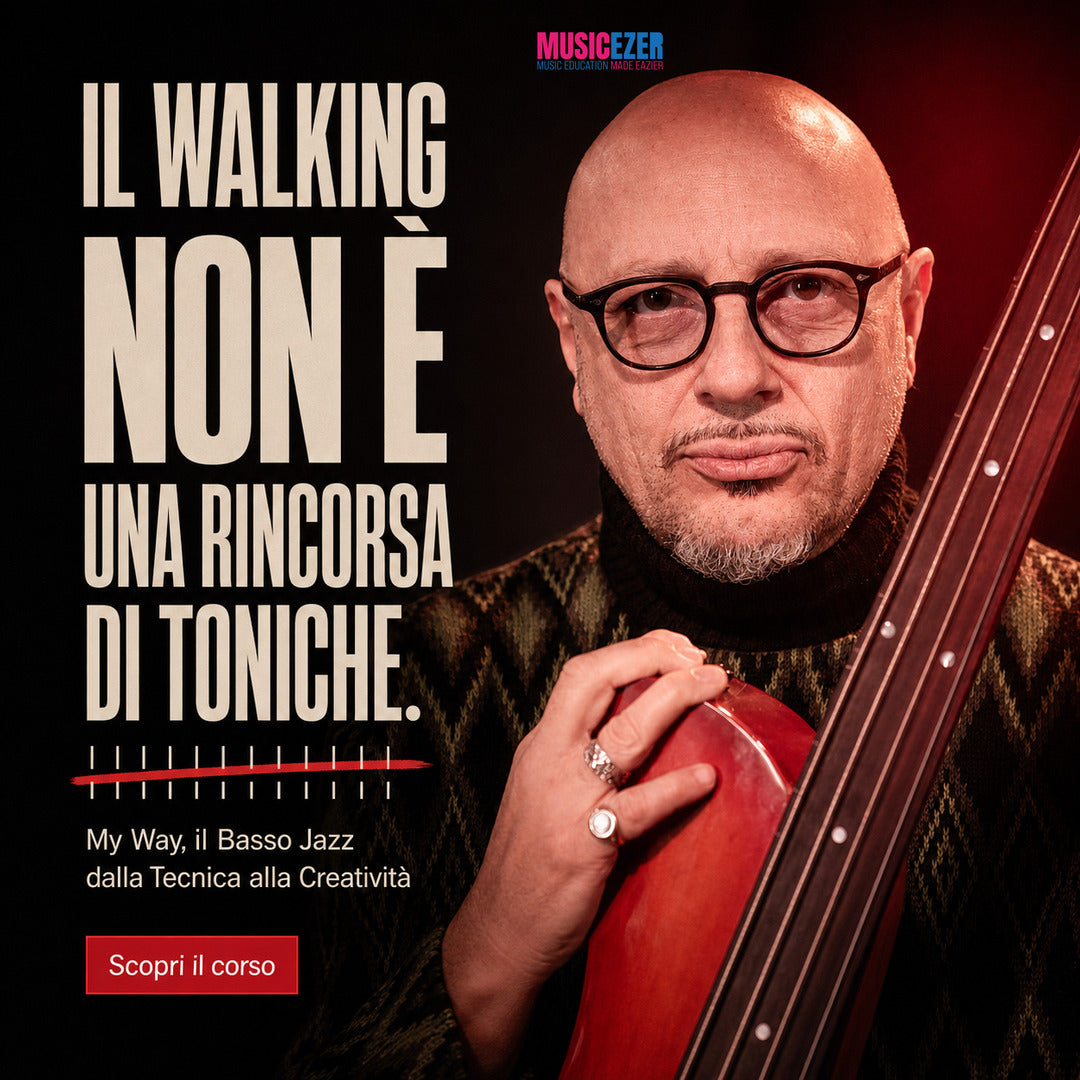




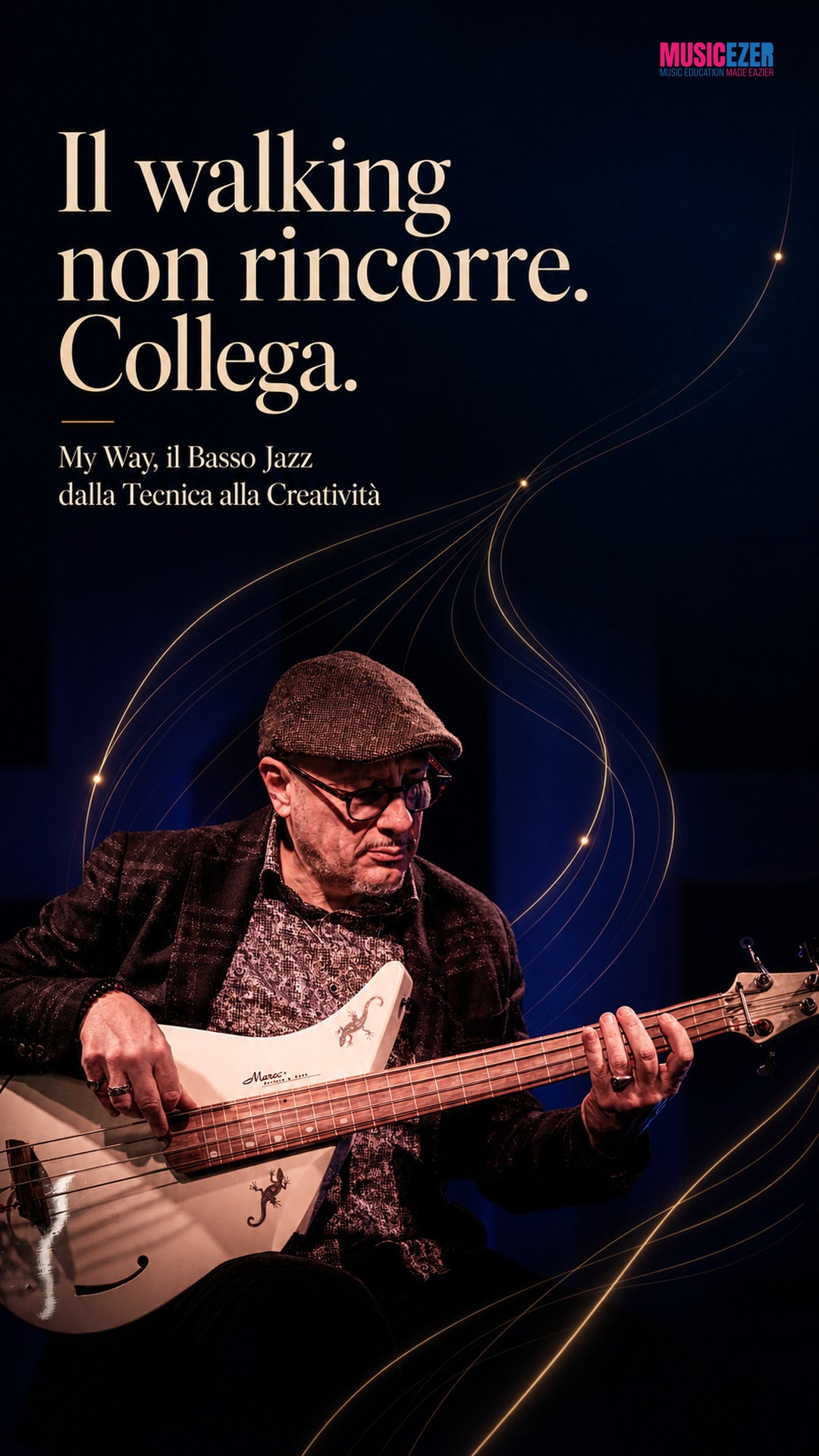
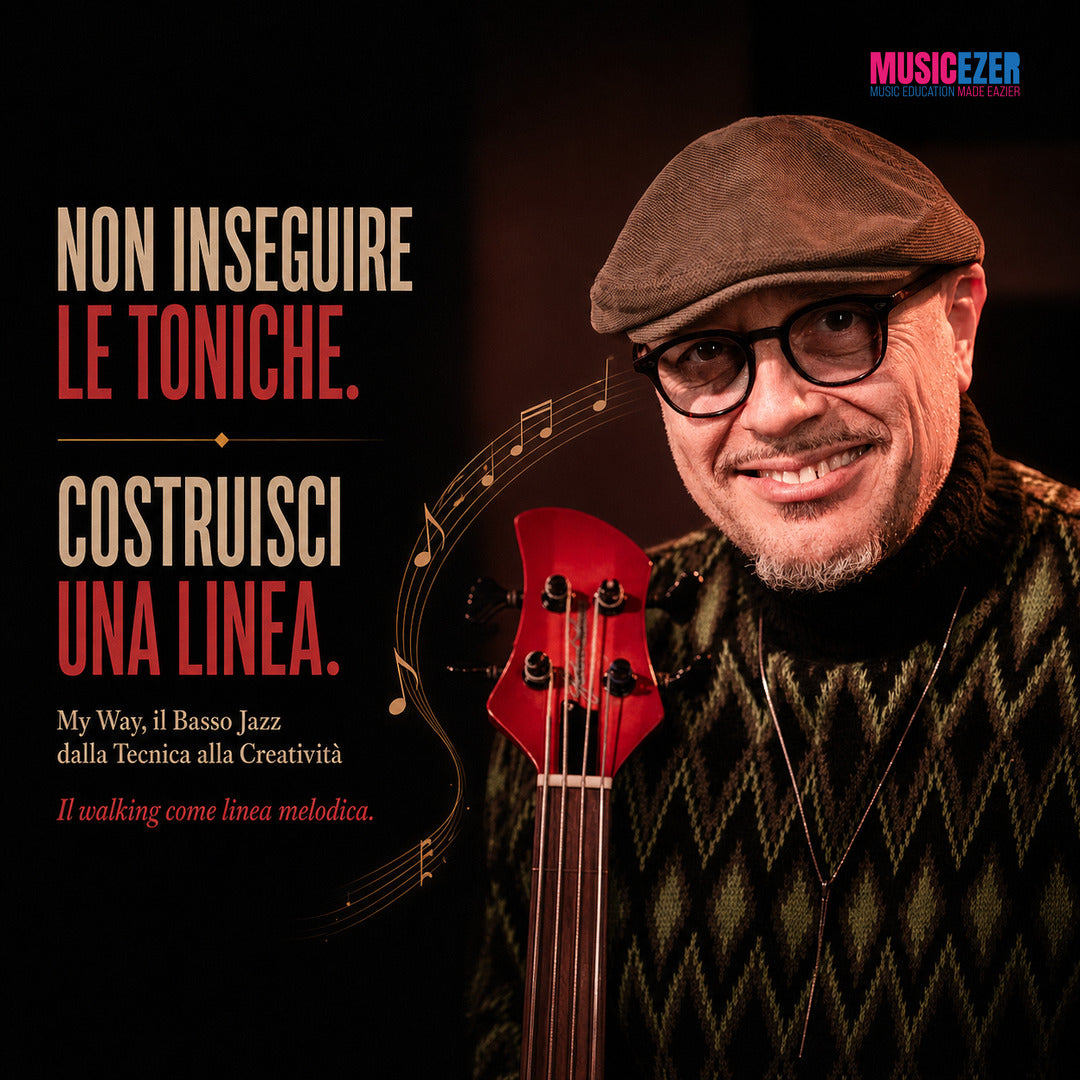
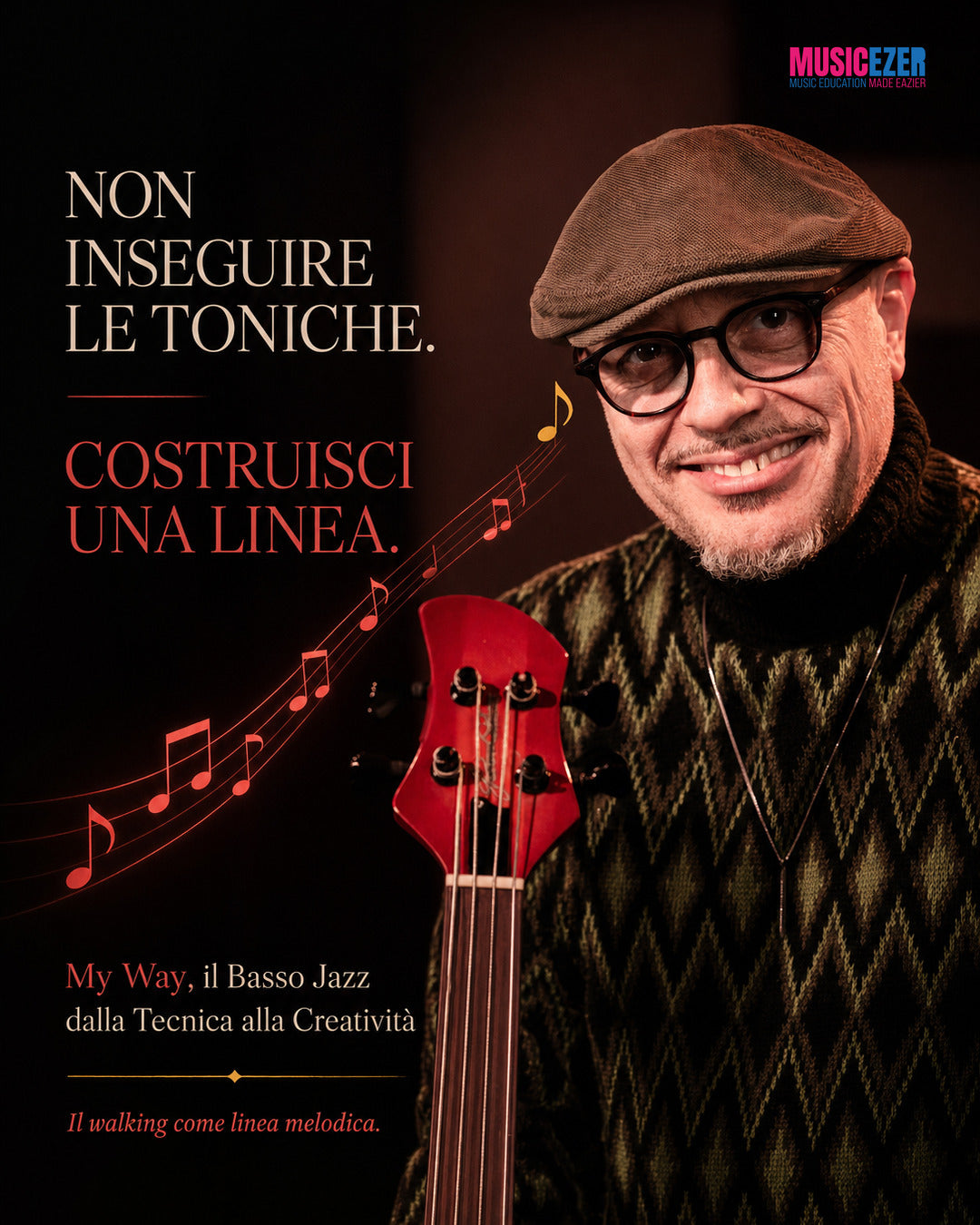
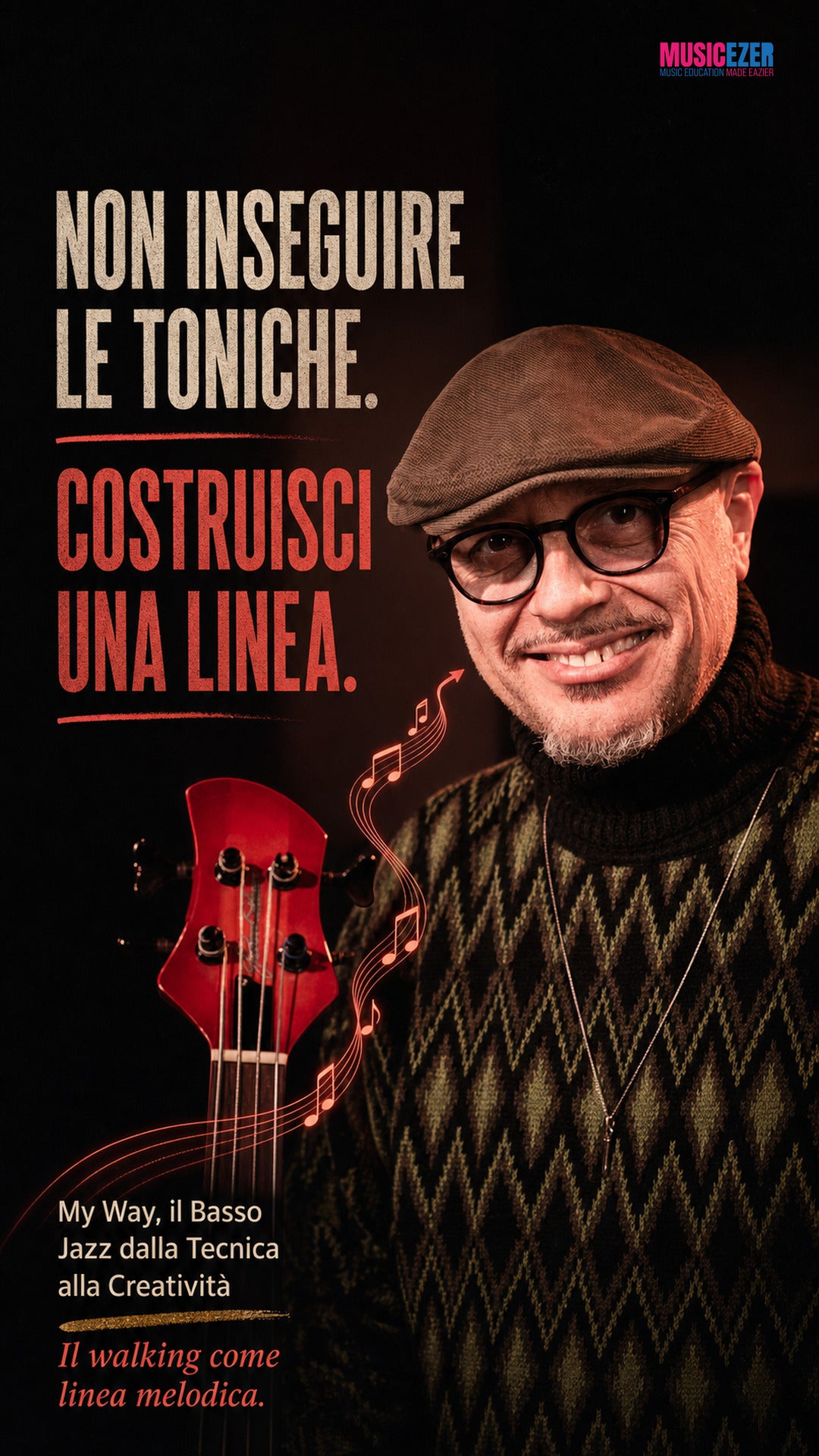
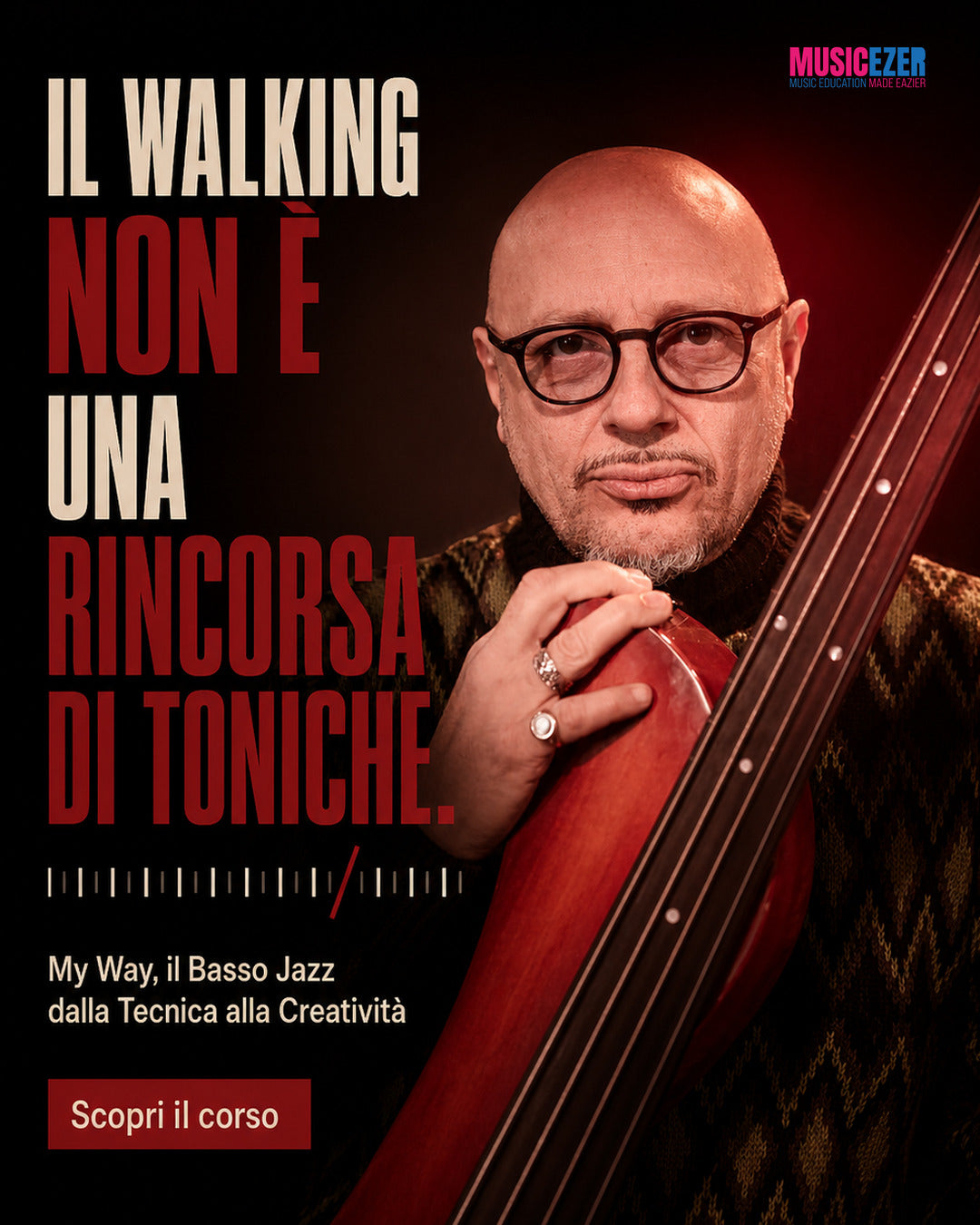
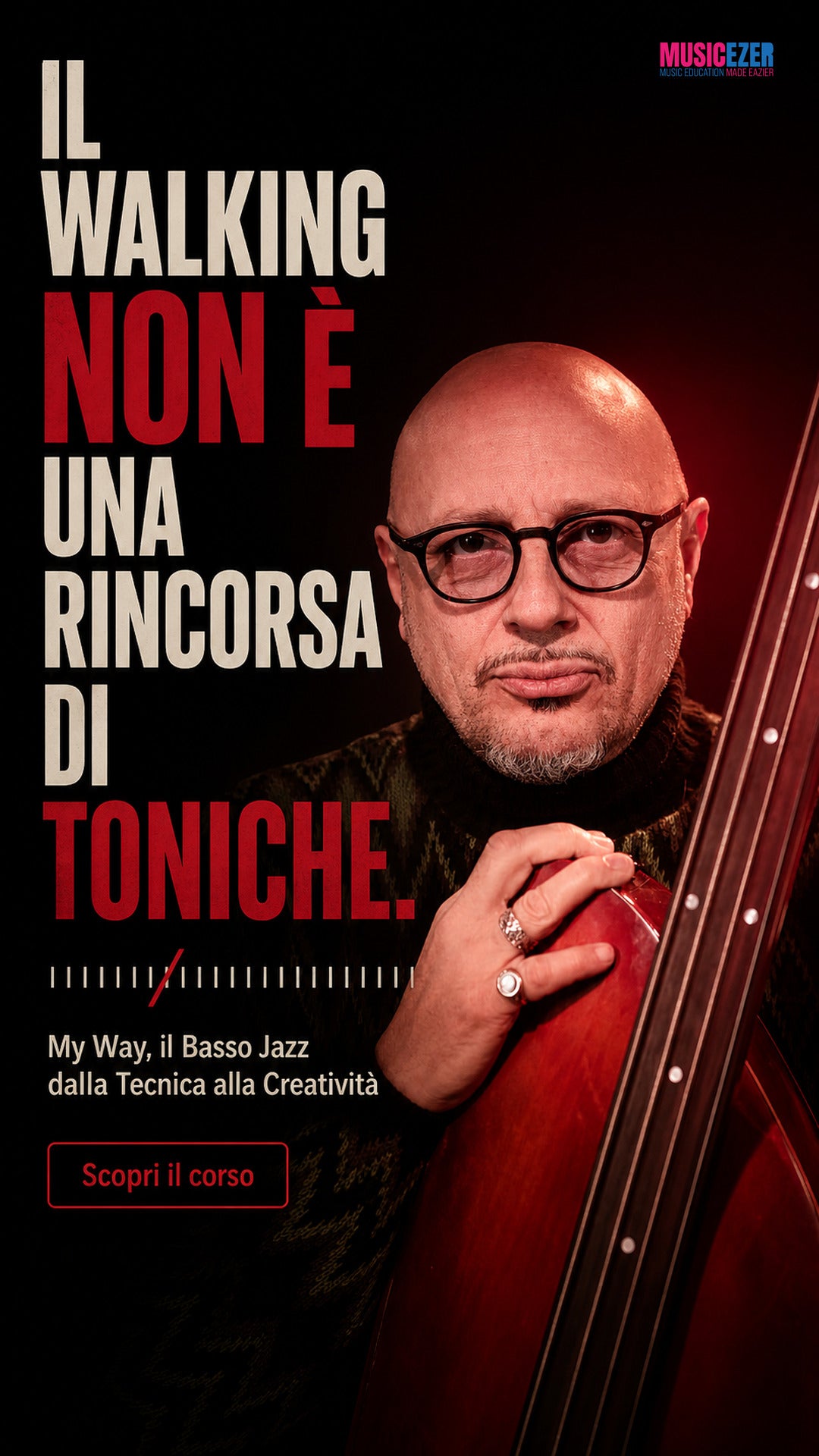
You make every change on the bass. Then you listen back: you fill one bar, then the next. Dario Deidda hears the same thing from his students. He teaches at a conservatory and came up through classical double bass.
He looks for your flaw where it starts, in the right hand. Taken as a chase after root notes, walking gets tiring and dull. The ten lessons are in Italian. They begin with the attack on the third and fourth strings, where walking lives. He still does that work with the bass strapped on while he watches a film, because it takes him almost no thinking.
It suits a bassist who already holds down a line, electric or upright.