HAMMOND JAZZ ORGAN
Soul, groove and improvisation
with Alberto Gurrisi
Course with subtitles available in
🇮🇹 🇺🇸
You sit at the Hammond, pick a preset, and play the piano with a different sound. An organ keyboard doesn't answer to your touch, and the expression lives in your right foot.
Alberto Gurrisi opens the first three drawbars, percussion on soft, fast and third, and there it is: the sound you've heard on records without ever knowing where it came from. Across 22 short lessons, one thing at a time, the left hand takes over the bass line and the right foot breathes the dynamics, over "Alligator Boogaloo" and "The Sidewinder". Gurrisi teaches in Italian, and every lesson is subtitled in English.
You play in a trio with guitar and drums, and nobody misses the bass, because you're carrying it.

THE COURSE DETAILS
Hammond Jazz Organ is a complete video course that takes you on a journey to discover the Hammond organ in jazz contexts and beyond. The path is led by Alberto Gurrisi, who approaches the instrument from its historical and technical foundations to the most advanced applications in live and studio contexts.
The course starts from the history of the instrument, invented in 1935 by Lawrence Hammond, and explores its functioning: drawbars, percussions, effects, pedal board and dynamic management through volume pedal. Already from the first lessons emerge the classic sounds of the tradition, from Jimmy Smith onwards, with timbral combinations for solo voice, accompaniment and orchestral sections.
The central section focuses on the left hand: construction of walking bass lines on single chords and harmonic progressions such as II-V-I, blues, rhythm changes and latin. Gurrisi shows how to manage bass and harmony simultaneously, using the pedal board. Ample space is dedicated to jazz voicings: four-note chords, extensions, alterations, drop 2 and horn techniques to spread the voices and harmonize melodies.
The path continues with materials for improvisation: chromatic approaches, harmonizations of the mixolydian scale, patterns with jumps, diminished scales and exercises inspired by Coltrane and Barry Harris. The relationship with other instruments, comping, two feel and different rhythmic feels are then explored: jazz waltz, boogaloo, shuffle, funk and odd times like 5/4, 7/4 and 9/4. Each lesson offers practical examples, progressive exercises and references to historical pieces to contextualize techniques and sounds in a concrete and immediately applicable way.
START NOWIntroduction to the history of the Hammond organ, invented in 1935 by Lawrence Hammond. Overview of how the instrument works: drawbars, percussion, chorus-vibrato effects, pedals and dynamic management via volume pedal. Notes on musical genres and use in jazz.
Review of classic drawbar combinations most used in jazz tradition. From Jimmy Smith's celebrated 8-8-8 sound to orchestral timbres and accompaniment sounds. Techniques to simulate horns, electric bass and harmonic sections with targeted timbral variations.
Building the first bass lines on single major, minor and dominant chords. Simple formulas with tonic, fifth, sixth and chromatic approaches. Introduction to conjunct motion, octave jumps and using the pedals to enrich the groove and add depth to the sound.
Practical application of walking bass techniques on the II-V-I progression, the most recurring harmonic structure in jazz. Use of conjunct motion, sixth jumps and approaches with chord tones to create fluid and musical harmonic continuity between chords.
Blues in a jazz key: from the classic twelve bars to bebop variations. Turnarounds, passages to the fourth degree, use of diminished chords and diatonic progressions. Practical examples of bass lines with chromatic approaches, tritone substitutions and II-V cadences.
Rhythm changes structure based on I Got Rhythm. Turnarounds, cascade of dominants in the bridge and advanced harmonic substitutions. Comparison with similar tunes like Flying Home and Eternal Triangle. Use of diminished chords to create chromatic movement in the bass line.
Techniques for playing bossa nova and other Latin styles. Bass on 1 and 3 with long notes, chromatic and scalar approaches. Rhythmic patterns to give the sense of Latin groove without overloading the rhythm. Notes on voicings and rhythmic management of accompaniment.
Study of seventh chords in their fundamental forms: major 7, dominant, minor, half-diminished and diminished. Sequential exercises on II-V-I progressions with harmonic continuity. Shell voicing technique to widen the voices and harmonize melodies by doubling guide tones.
Four-voice voicings with major extensions: 3-5-7-9 forms and drop 2 techniques. Widened harmonizations to favor harmonic development. Using two hands when not playing bass, thanks to pedal support to expand harmonic possibilities.
Enriching voicings with extensions and alterations on dominant chords. Use of flat ninths, sharp ninths, altered thirteenths and elevenths to create harmonic density. Preparation for the next chapter dedicated to materials for improvisation and advanced modal scales.
Exercises on fundamental materials of jazz language: chromatic approaches, tensions resolving to chord tones and encircling target notes. Complete mapping of major, minor and dominant chords in all keys to develop technique and harmonic awareness during improvisation.
Harmonizing the Mixolydian scale with seventh chords built on scale notes, inspired by Barry Harris's method. Each note is harmonized with internal arpeggios forming phrase fragments typical of bebop. Ascending and descending exercises with chromatic approaches and encirclement.
Patterns based on the Mixolydian scale with third and fourth jumps. Exercises with consecutive jumps and alternating jumps, both ascending and descending. Characteristic bebop and modal jazz sonorities, applicable on harmonic progressions and improvisations at medium-fast tempos.
Descending pattern inspired by Coltrane on the Dorian scale, with chromatic approach on each triad contained in the scale. Rhythmic variants with chord tones on downbeats or chromatic approaches on upbeats. Use of sixteenth notes for slow tempos, with saxophone-like and dense sonority.
Study of diminished scales built with half-step/whole-step alternation. Only three scales for all keys thanks to internal symmetry. Three-finger fingering for speed. Application on altered dominant chords and modal contexts like Caravan, with minor third jump exercises.
Relationship with other instruments in different formations: organ trio with guitar and drums, enlarged ensembles with horns and percussion. Comping and accompaniment techniques, three-voice voicings, swing rhythmic patterns, two-feel and bass management with the left hand.
Jazz waltz and the difference between three-quarter and six-eight time. Typical grooves like Someday My Prince Will Come with strong accent on 1, and All Blues with distributed pulse. Understanding the two strong points in the measure to correctly interpret the ternary groove.
Tips on speed and using the metronome on 2 and 4 to simulate real swing. Subdividing time into multiple zones to study fast rhythms without anxiety. Relaxed approach to tempos over 300 bpm by thinking of half of half of the beat.
Boogaloo, typical groove of the 40s-50s with Latin and Caribbean influences. Bass on 1 and 3, fixed rhythmic patterns with the right hand on thirteenth and ninth chords. Examples from Lou Donaldson's Alligator Boogaloo, Lee Morgan's Sidewinder and The Jody Grind.
Shuffle in the context of electric blues and soul. Patterns inspired by Jimmy Smith and the tune Midnight Special. Regular rhythmic accompaniments with classic shuffle figures, also usable with piano. Variants with repeated notes and simplifications to adapt to different solo contexts.
Funk techniques applied to jazz, starting from Herbie Hancock's Cantaloupe Island. Use of chromatic approaches to chord tones, passages on the sixth degree and marking quarters with pedal pump. Right hand patterns derived from shuffle and boogaloo.
Practical overview of odd meters 5/4, 7/4 and 9/4, including internal subdivisions, clave and differences between swing and straight eighths. Understanding the logic of accents is the key to making even the most irregular groove sound natural.
COURSE EXCERPTS
COURSES ON MUSICEZER
95%
User satisfaction rate
87%
Course completion rate
STRENGTHS
A video teaching path in 4K and HD audio, the completebookletwithall the transcriptionsof the musical parts analyzed and played byAlberto Gurrisi.
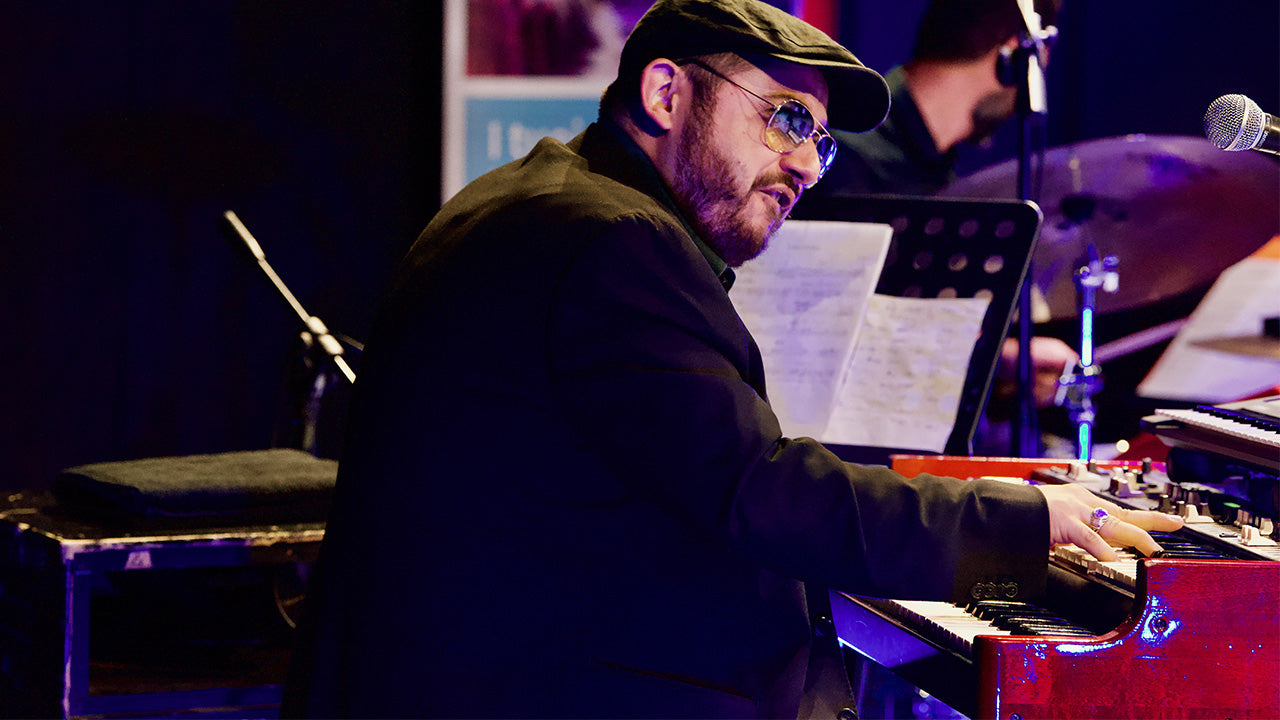
♾️ THE COURSE IS YOURS FOREVER
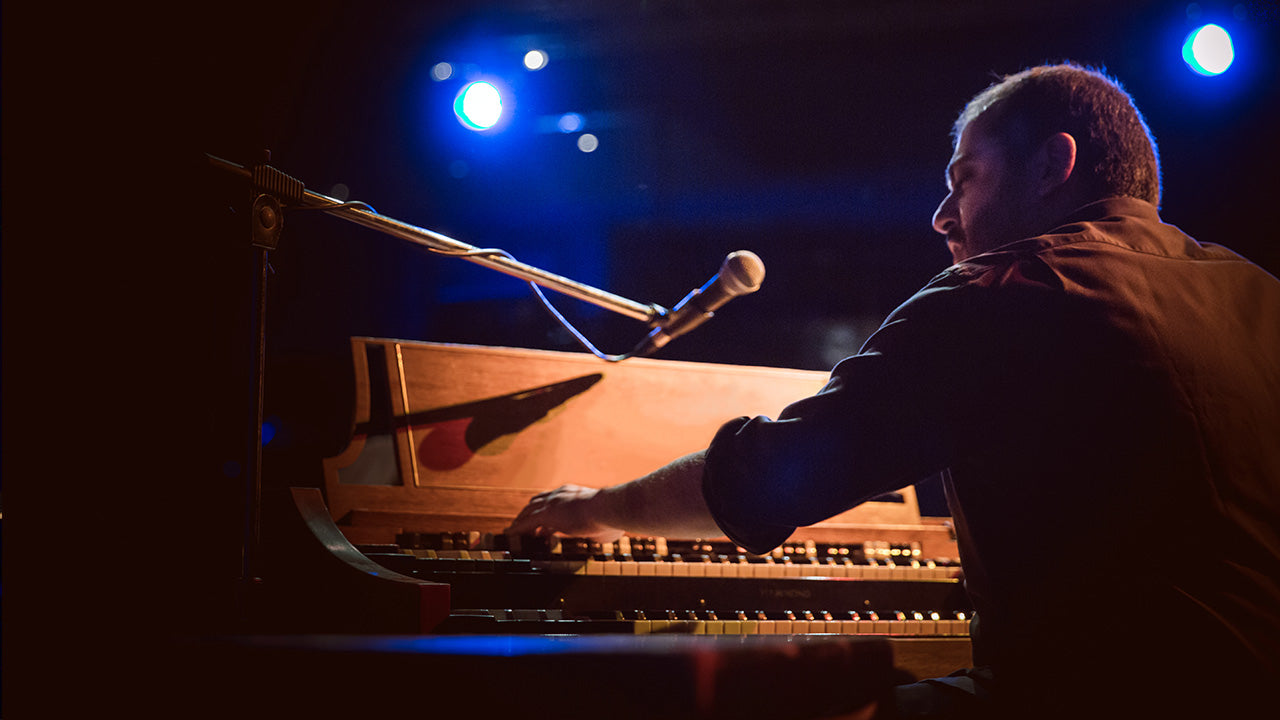
🎧 LIKE IN THE FRONT ROW
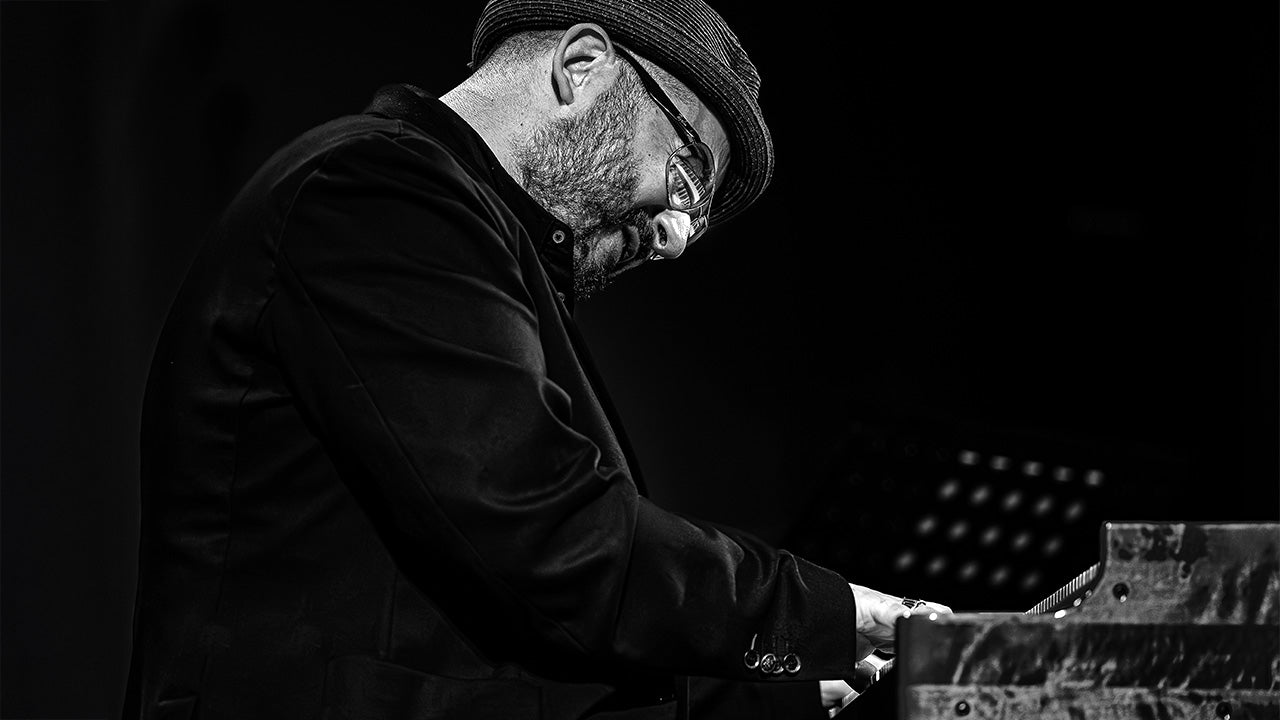
🎓 LEARN FROM THOSE WHO REALLY PLAY
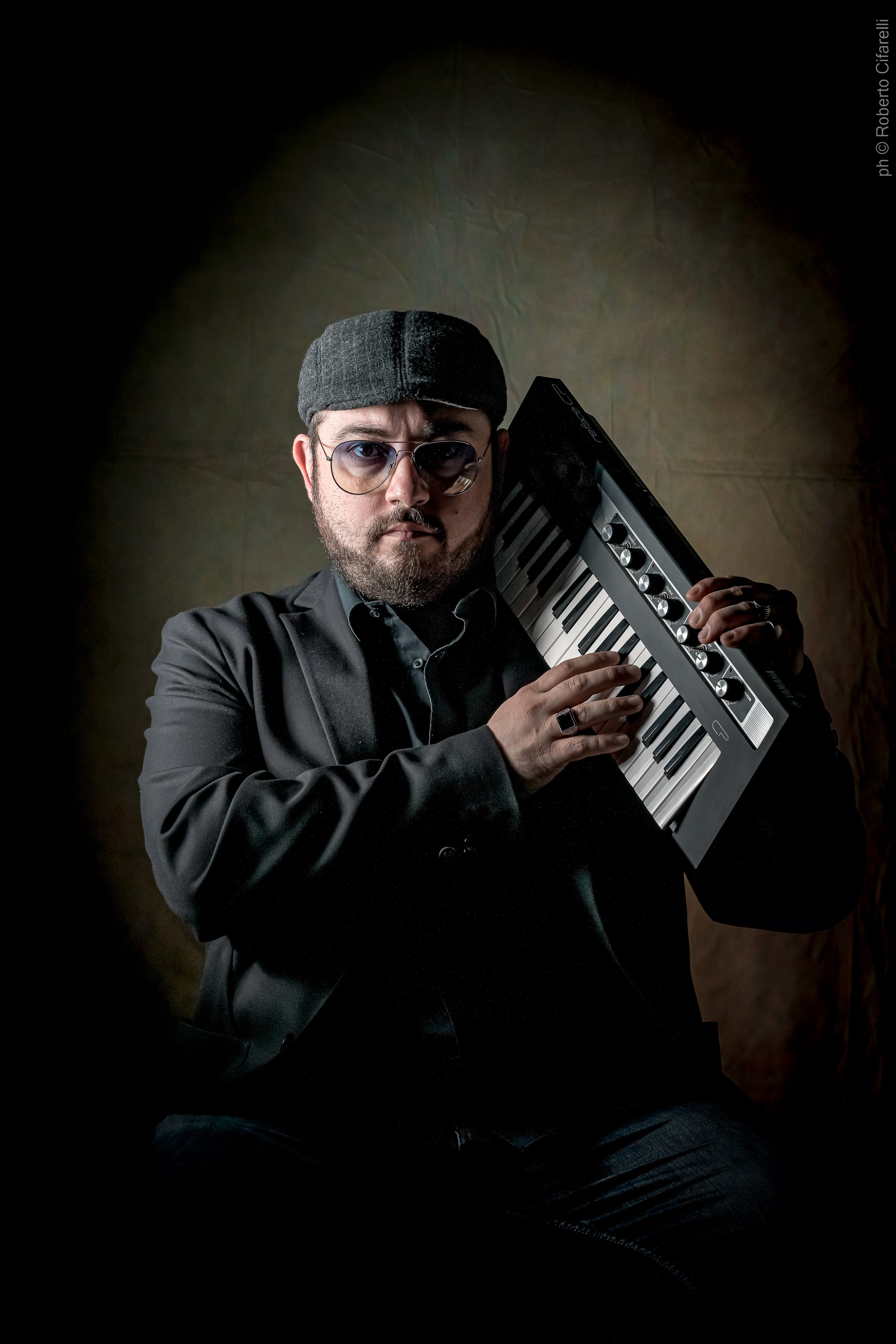
ALBERTO GURRISI
Born in Milan in 1984, he started with classical piano but soon turned to jazz, studying with Fabrizio Bernasconi (instrument) and Filippo Daccò (functional harmony). From 2003 to 2007 he attended the Civici Corsi di Jazz di Milano with Paolo Birro and Mario Rusca.
In 2003 he discovered the Hammond organ as a self-taught musician and never stopped. He sought comparisons with the greats of the manual: Joey DeFrancesco, Sam Yahel, Larry Goldings, Tony Monaco. From that moment the organ became his main instrument.
In those years he met Franco Cerri, with whom he collaborated steadily from 2007 to 2018, and Sugar Blue, legendary American blues harmonica player. With Sugar Blue he toured blues festivals in Italy and Europe (2006-7).
Since 2003 he has been playing regularly with guitarist Alessandro Usai. Together they created two projects: the Spare Time Trio (since 2004) and the Alex Usai Blues Band (since 2009), with which they released four albums and toured Italian clubs and festivals.
In 2011 he moved to Turin and formed his quartet with Gianni Denitto (alto sax), Gianni Virone (tenor sax) and Alessandro Minetto (drums). Together they recorded "888" in 2015 and "Social Distance" in 2025.
As a sideman he plays throughout Europe with various groups, including the Max Ionata Trio with Gegè Telesforo and the Eddie Martin Blues Band. He co-produces records with the Pepe Ragonese Organ Trio, the Happy Tree Quartet by Alfredo Ferrario and Marco Castiglioni, and two albums with the Alessio Menconi Trio.
Since 2015 he has been co-founder of Blue Moka, who collaborate steadily with Fabrizio Bosso. The first album was released in 2017, recorded at Casa del Jazz in Rome, followed by dozens of concerts. In 2023 came the second work in quartet, "Enjoy".
In 2018 he brought his trio to the Torino Jazz Festival with two American heavyweights: Seamus Blake on tenor sax and Adam Nussbaum on drums. The concert was rebroadcast on Radio Rai3.
After two years living in Rome, from 2019 to 2023 he collaborated steadily with Fabrizio Bosso and Rosario Giuliani in the "Connection" project, which in 2021 became an album published by Warner Music.
He alternates concerts with teaching activity: group meetings on ensemble music and individual lessons, in person and online.
On stage he has played with musicians of the caliber of Joe Cohn, Jim Mullen, Doug Webb, Rob Sudduth, Darryl Jones, Enrico Rava, Max Ionata, Gegè Telesforo, as well as projects with the Torino Jazz Orchestra plus Carla Bley, Steve Swallow and Andy Sheppard. And then again Mauro Negri, Emanuele Cisi, Bebo Ferra, Giovanni Amato, Francesco Cafiso, Tino Tracanna, Amedeo Ariano, Massimo Manzi, Alfredo Ferrario, Enzo Zirilli, Andrea Dulbecco, Luigi Tessarollo, Dino Piana, Gianni Sanjust, Tiziana Ghiglioni, Emilio Soana, Paolo Tomelleri and many other protagonists of the Italian jazz scene.
STUDY WITH THE MASTERHOW MUCH DOES IT COST?
Accessible to everyone at a fraction of its real value!