Le corde sono sempre le stesse.
Allora perché il corpo ti ferma?
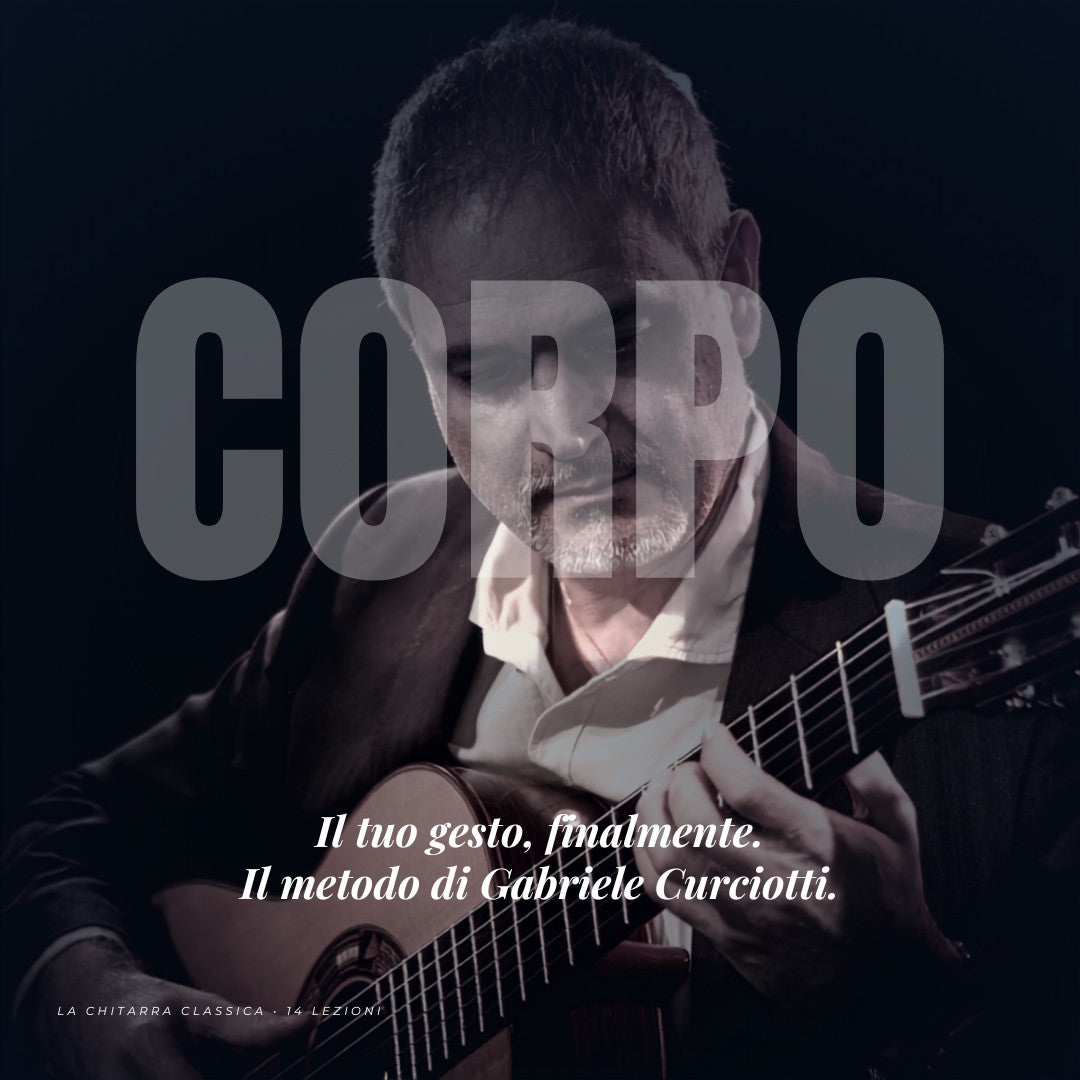
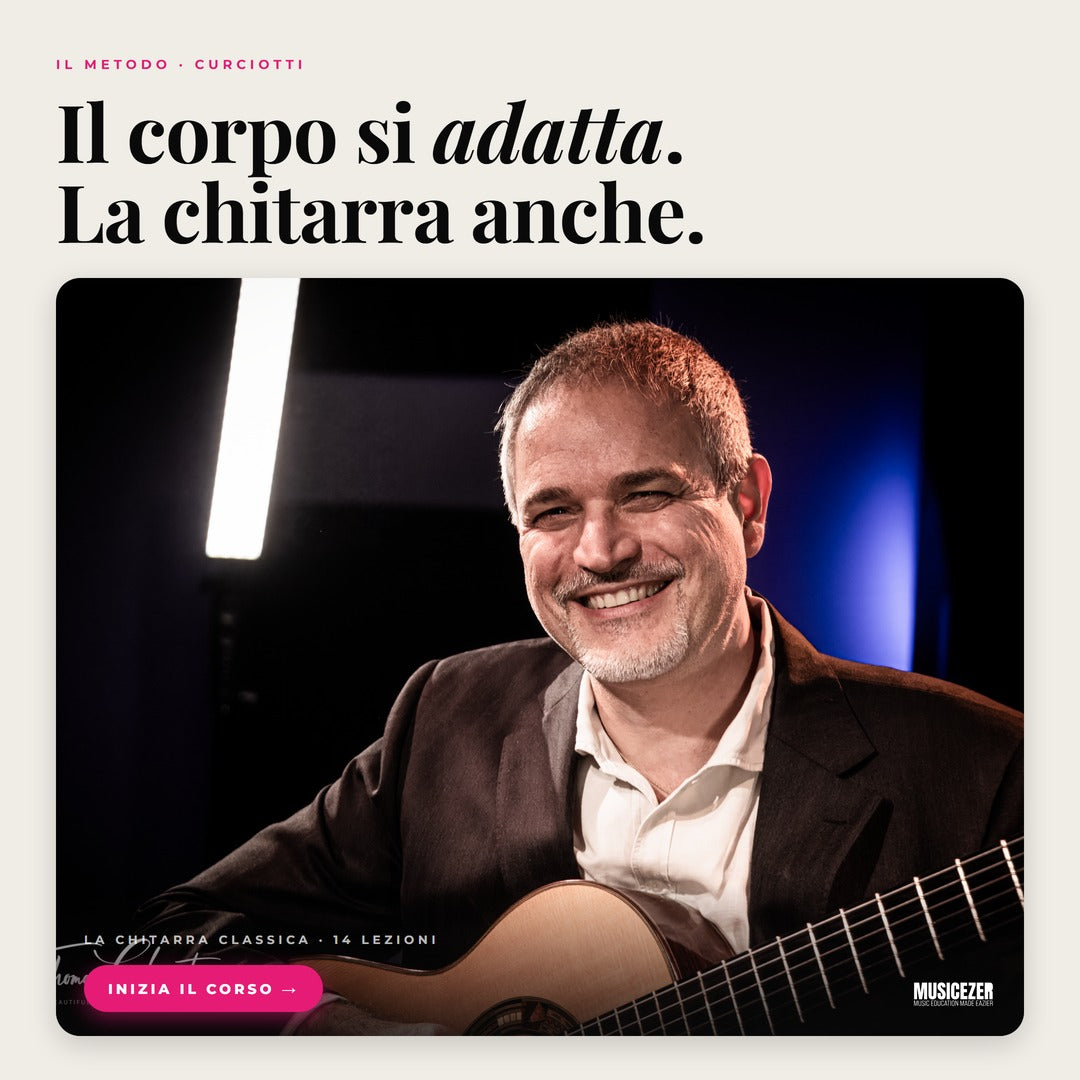
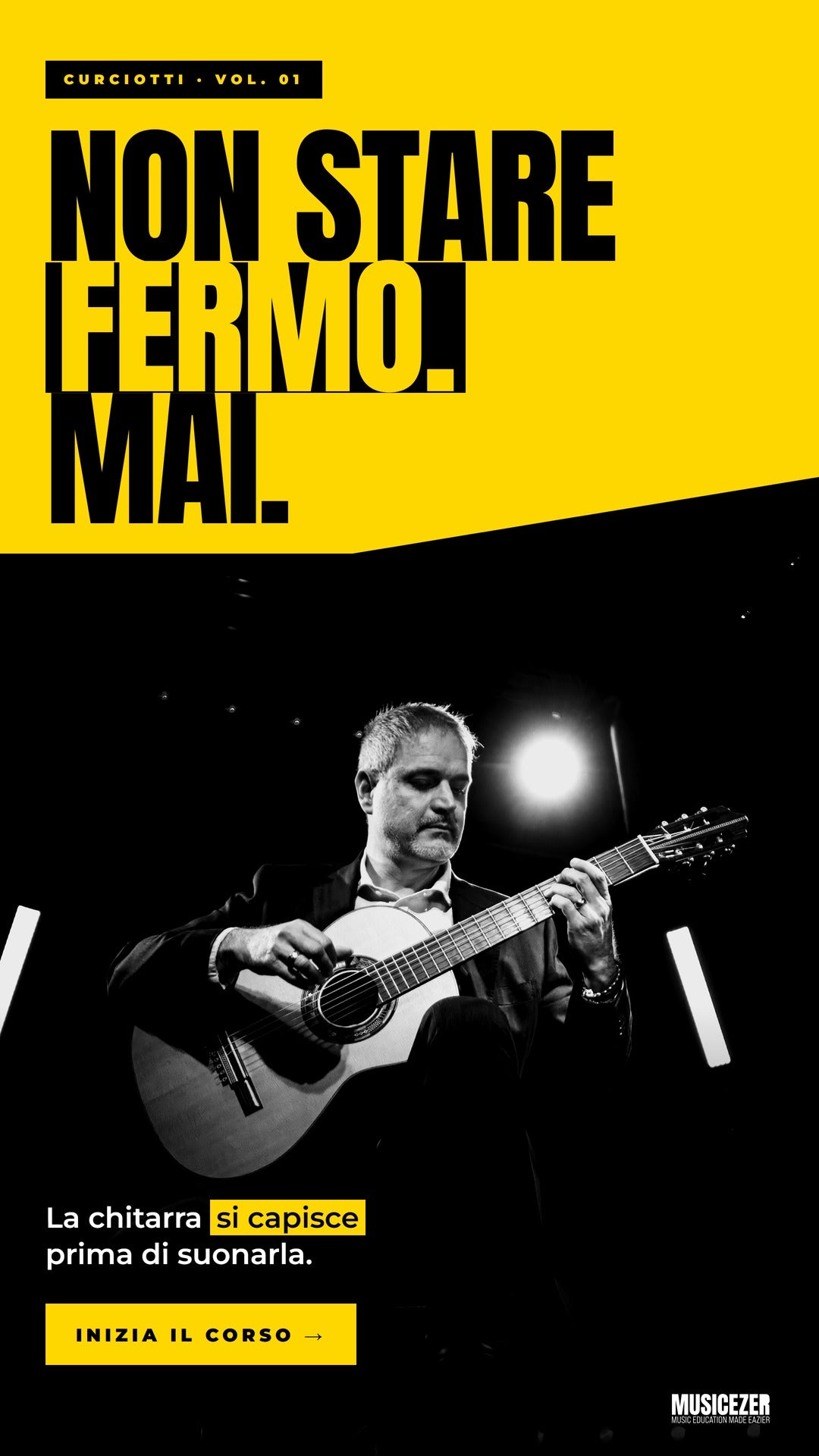
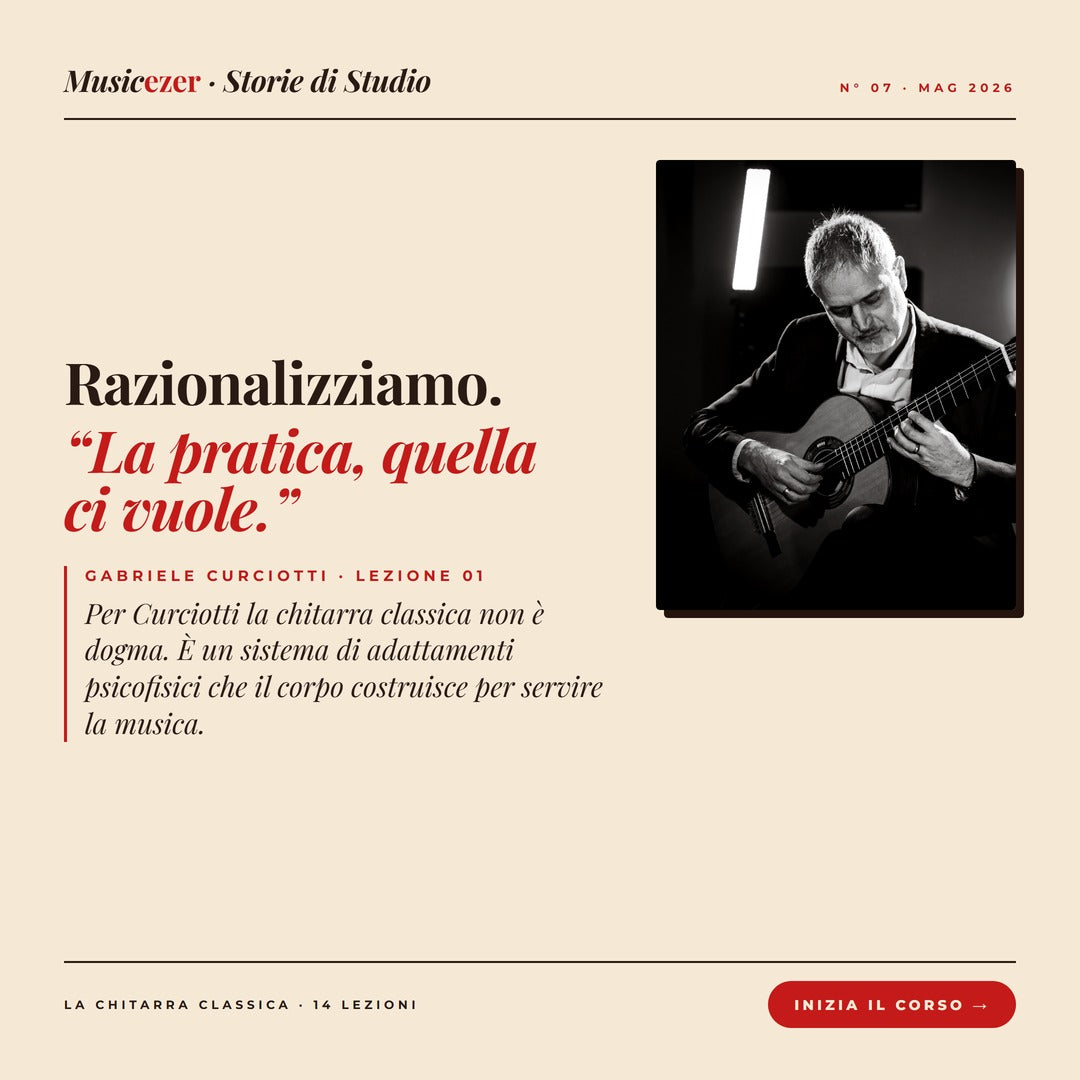
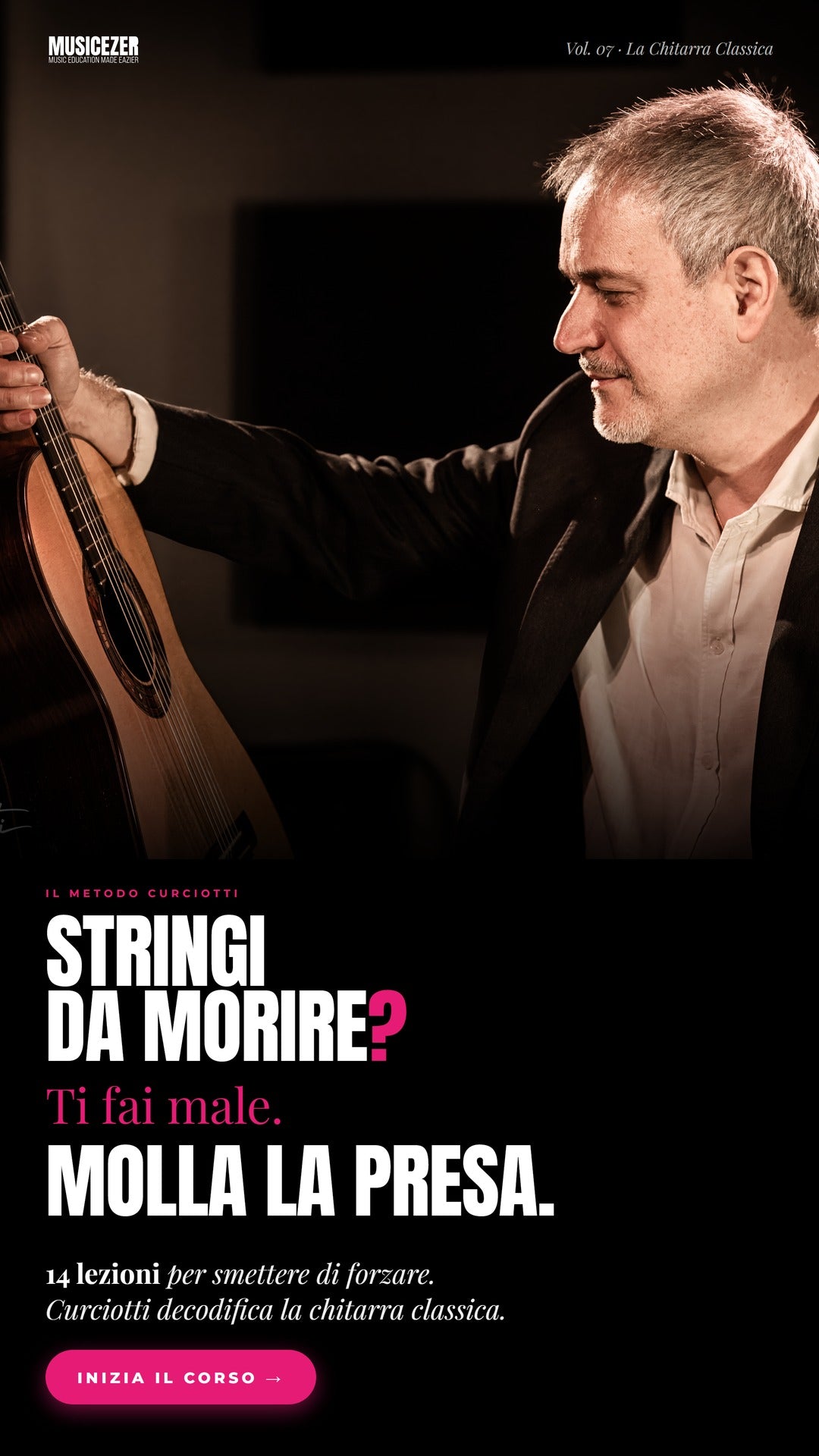
14 lezioni con Gabriele Curciotti, concertista e fisioterapista.
Il metodo per chitarra classica che non ti hanno mai insegnato.

Sottotitoli disponibili in 🇮🇹 🇺🇸
Studi ore e il corpo ti chiede di smettere.
Se almeno una ti suona familiare, questo corso è fatto per te.
Dopo due ore spalle e braccia ti fanno male
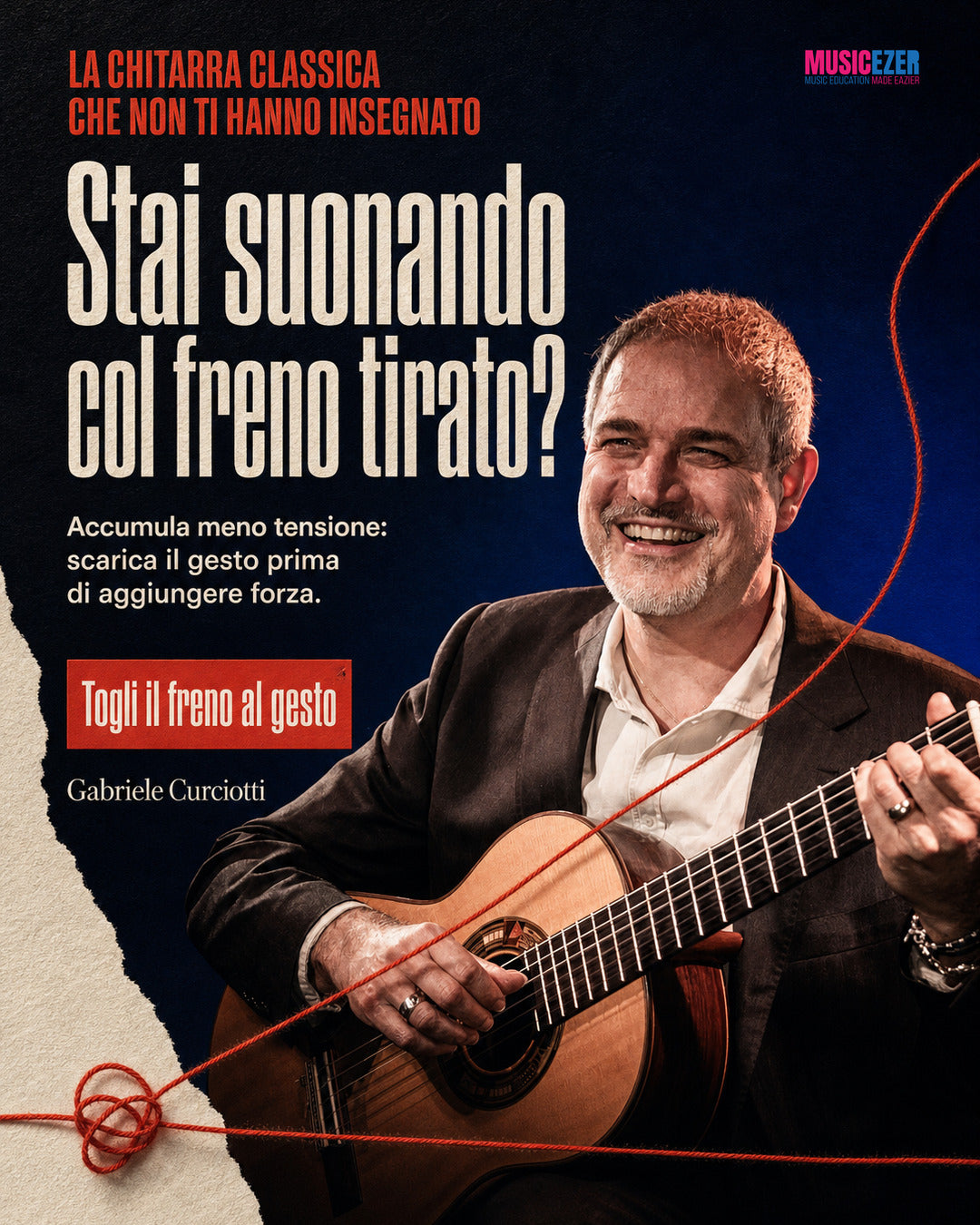
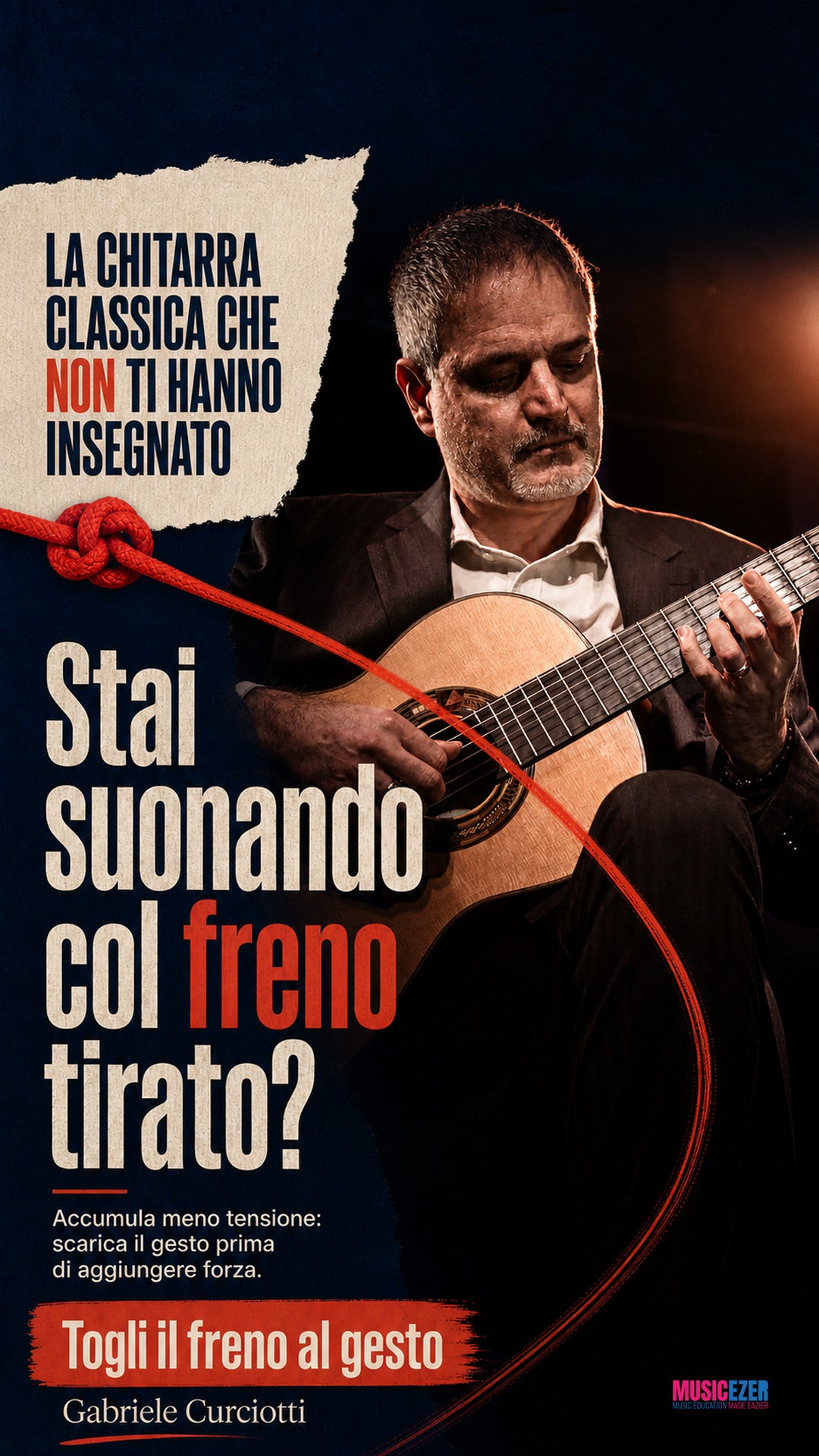
Pensi di dover dare più gas. Ma stai guidando col freno a mano tirato, e nessuno te l'ha mai detto. Non è questione di testa: è biomeccanica.
Il 99% dei poggiapiedi è già inclinato
Se ci appoggi tutto il piede, stai lavorando contro la tua gamba per tutto il tempo di studio. Il poggiapiede che hai comprato non è neutro come credi.
Ti dicono "si fa così"
Ma le corde sono sempre le stesse, la chitarra è sempre quella, tu sei sempre tu.
Un motivo ci deve essere. Nessuno te lo spiega.
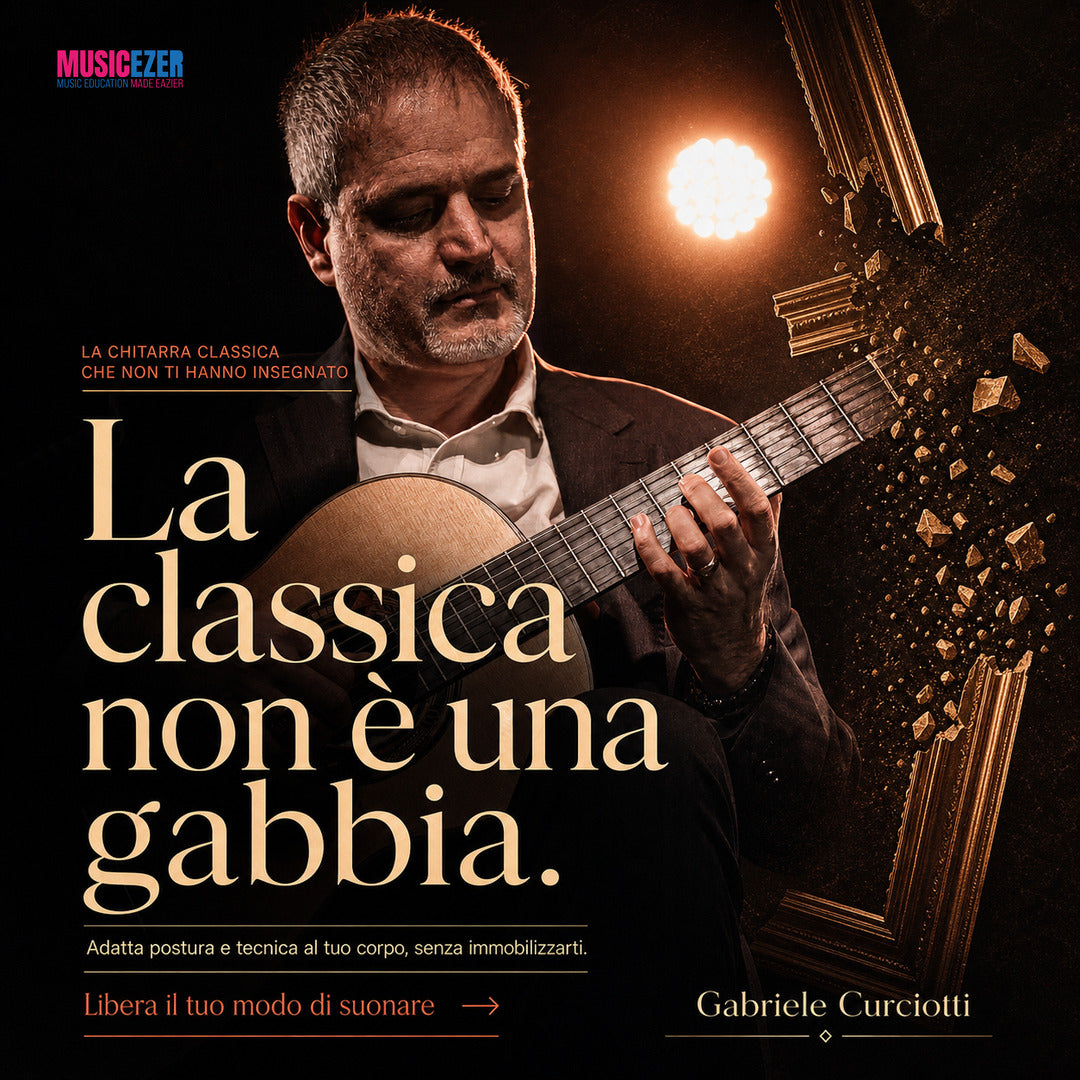
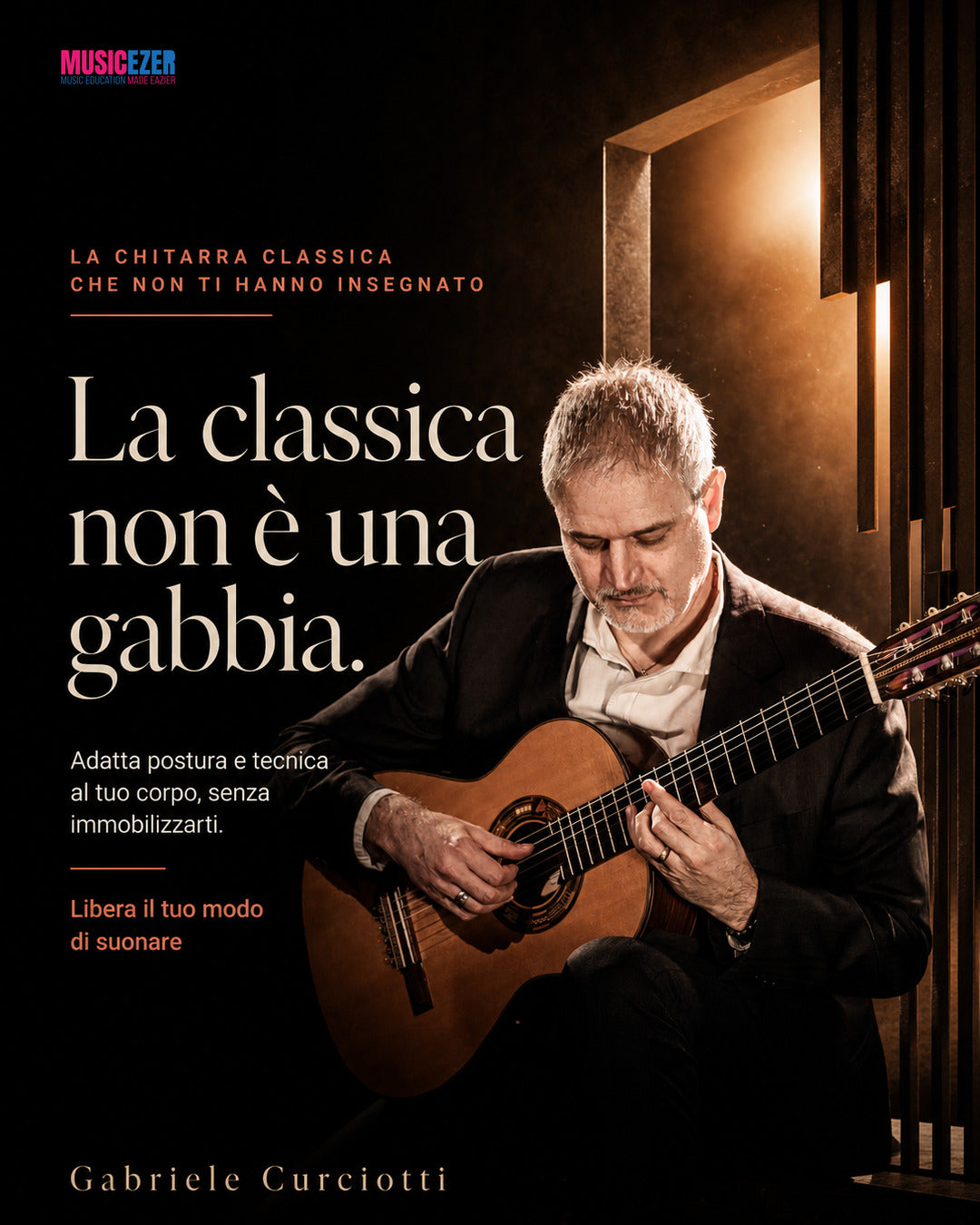
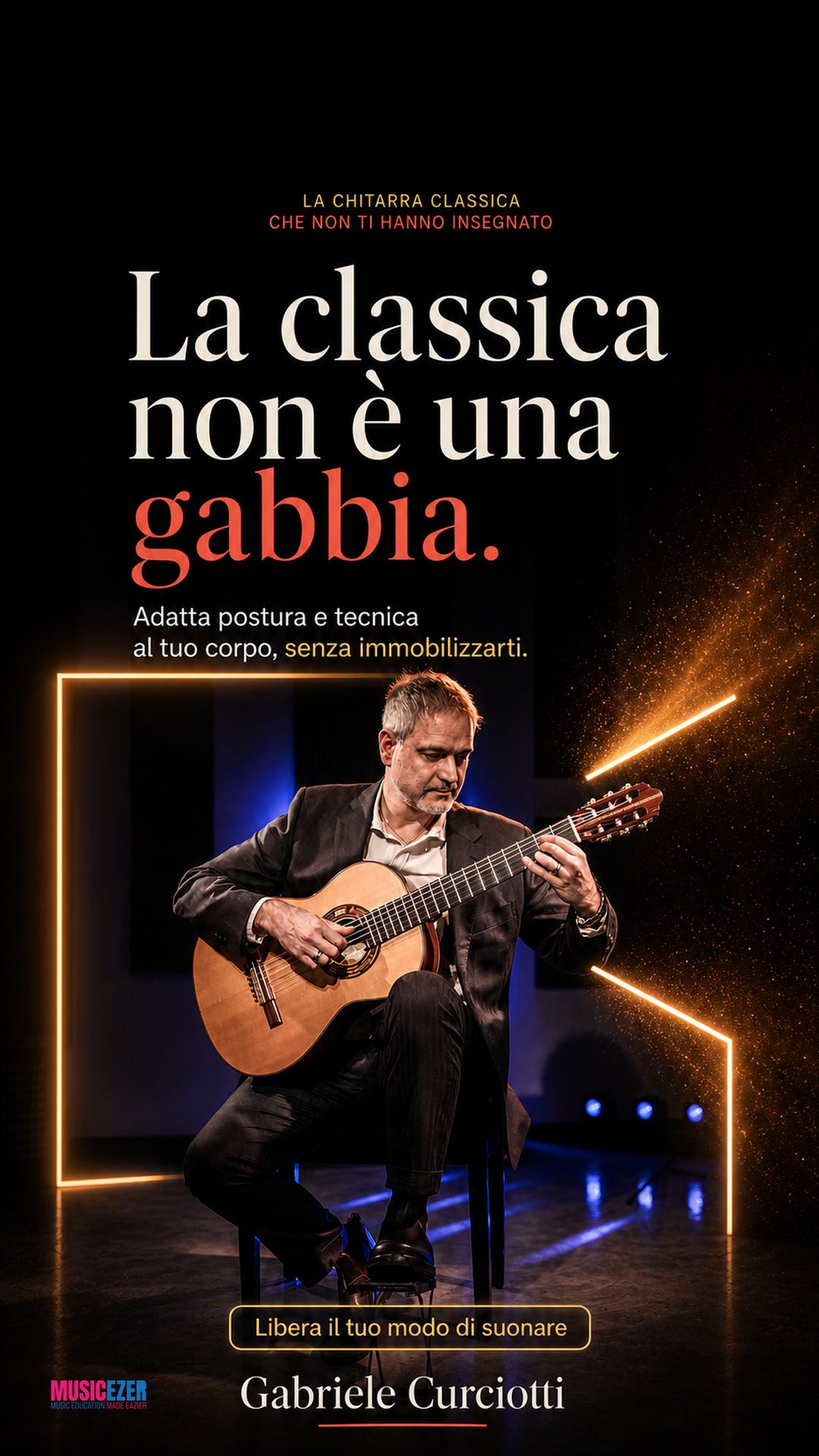
"La chitarra classica non è una gabbia, non è qualcosa di fisso, inamovibile e da cui non si può uscire."
Gabriele Curciotti
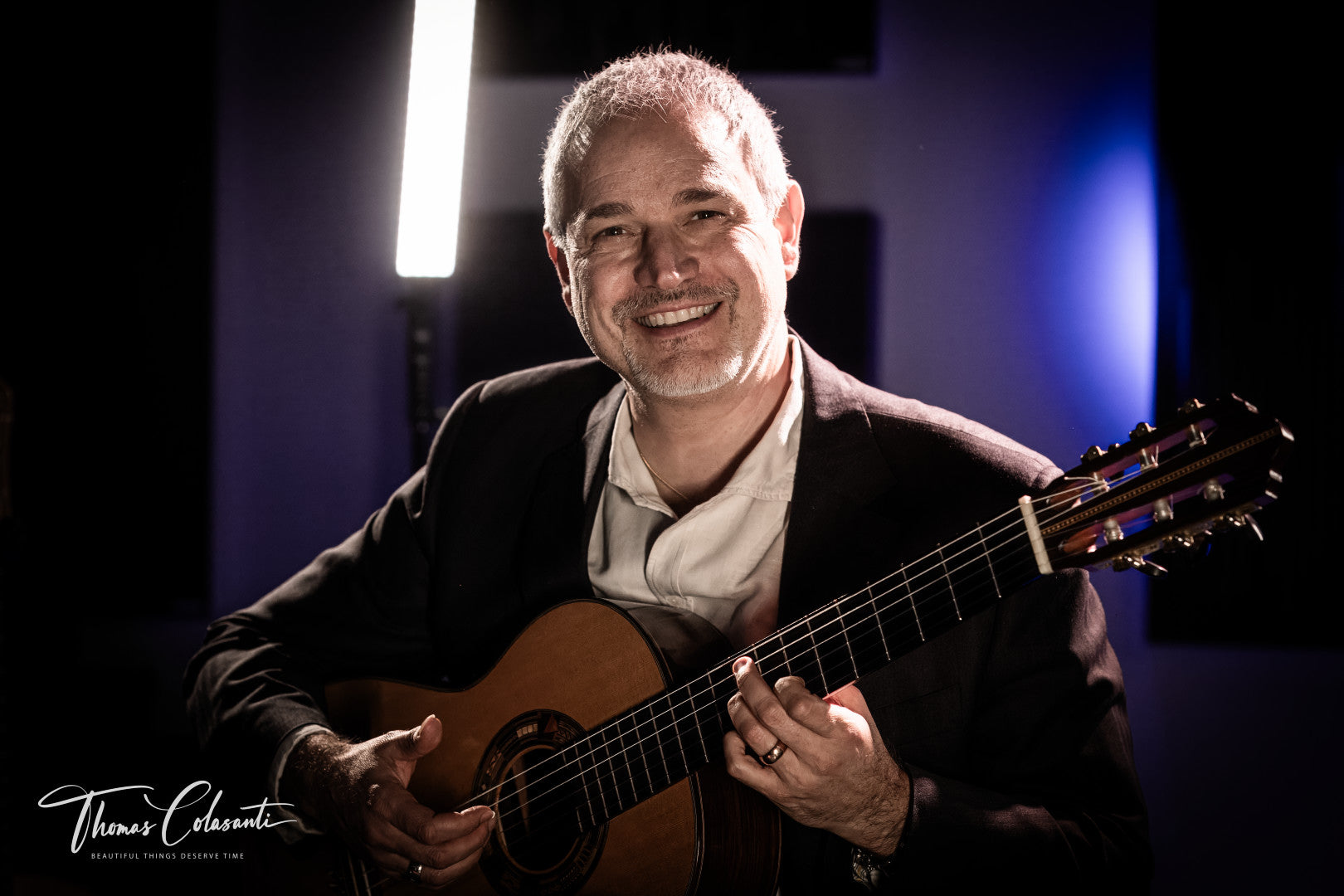
Cosa cambia quando suoni
Risultati che sentirai subito su di te (fisicamente!)
-
Due ore di studio senza che il corpo ti fermiImpari a scaricare la tensione prima che si accumuli e capisci quando stai lavorando di più invece che meglio.
-
Comprendi ogni posizione del corpoBascula antero-posteriore, diagonali del braccio, raggio d'azione. Smetti di seguire una regola: capisci la leva che c'è sotto.
-
Il mignolo arriva dove deve arrivareSenza forzarlo, senza disarticolarlo. Usi la diagonale del braccio e la tastiera smette di essere un territorio che ti combatte.
-
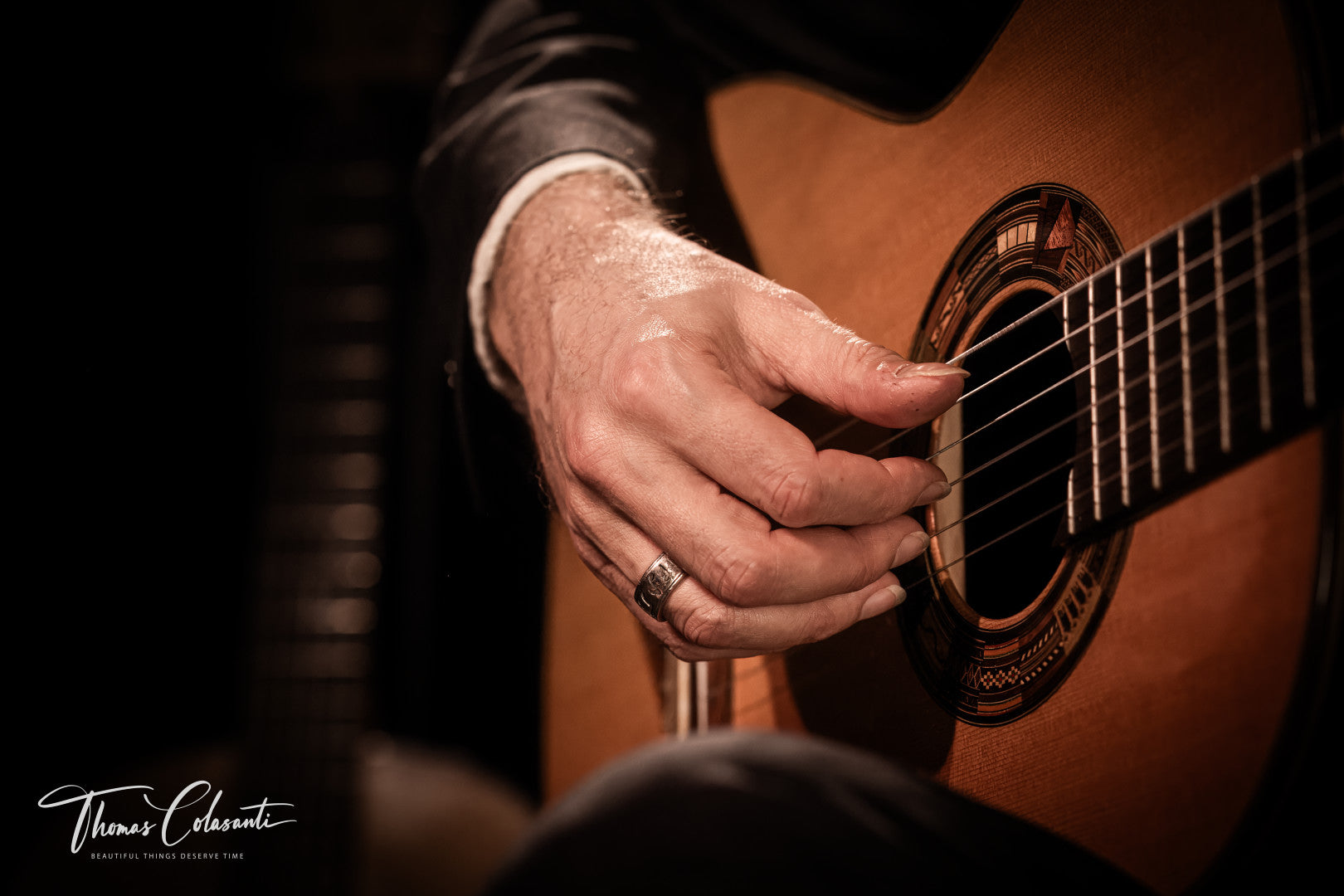
Il tocco è rilassamento, non sforzoTocco appoggiato e tocco pizzicato sono due modi di lasciare la corda, non due modi di colpirla. Il suono cambia in automatico.
-
La postura smette di combattere la chitarraGamba destra o sinistra, angolazione del ginocchio, bascula del busto. Scegli sulla tua struttura, non su presunte regole tradizionali che ti hanno inculcato.
8.778+ musicisti studiano su Musicezer
Ecco cosa dicono.
Bravo!
Rob”
Questo è il corso. Non un trailer.
Due estratti dalle lezioni. 4K, audio HD, inquadrature scelte da musicisti.
Se la qualità di questi 5 minuti ti convince, immagina 3 ore.
Dalla postura al repertorio. In ordine.
È il principio di Curciotti. Ogni lezione costruisce sulla precedente. Niente salti, niente buchi.
14 lezioni • +3,5 ore • Booklet PDF con trascrizioni
Questo corso è per te se
Prova allora: THE ACOUSTIC GUITAR IN POP - Ciro Manna →
Ti potrebbe piacere: START FINGERSTYLE TODAY - Alberto Lombardi →
Dai un occhio a: THE LANGUAGE OF JAZZ GUITAR - Eleonora Strino →
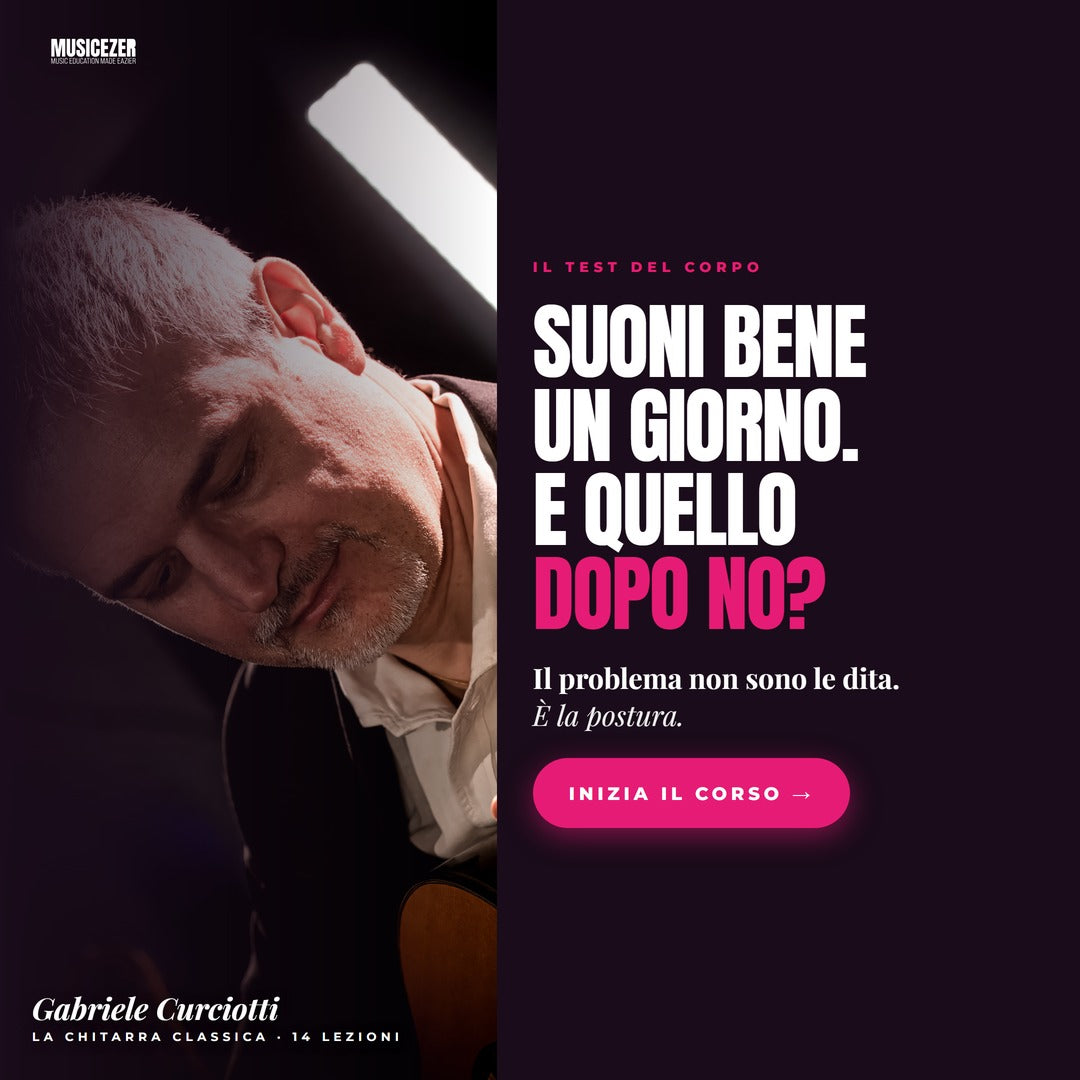
Adesso suoni 2 ore e spalle e braccia non bruciano più
14 lezioni con Gabriele Curciotti. Il metodo biomeccanico che nessuno ti ha mai insegnato.
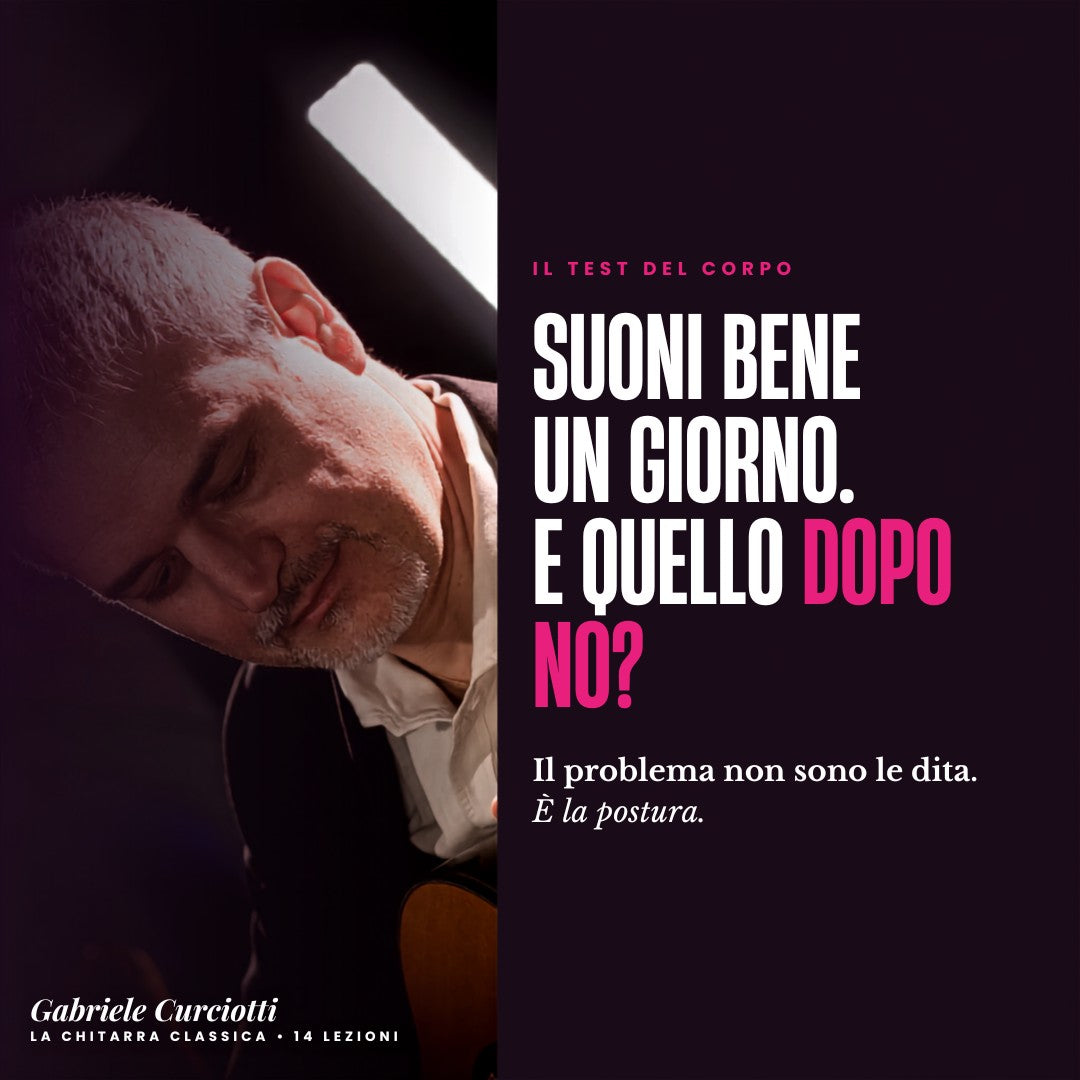
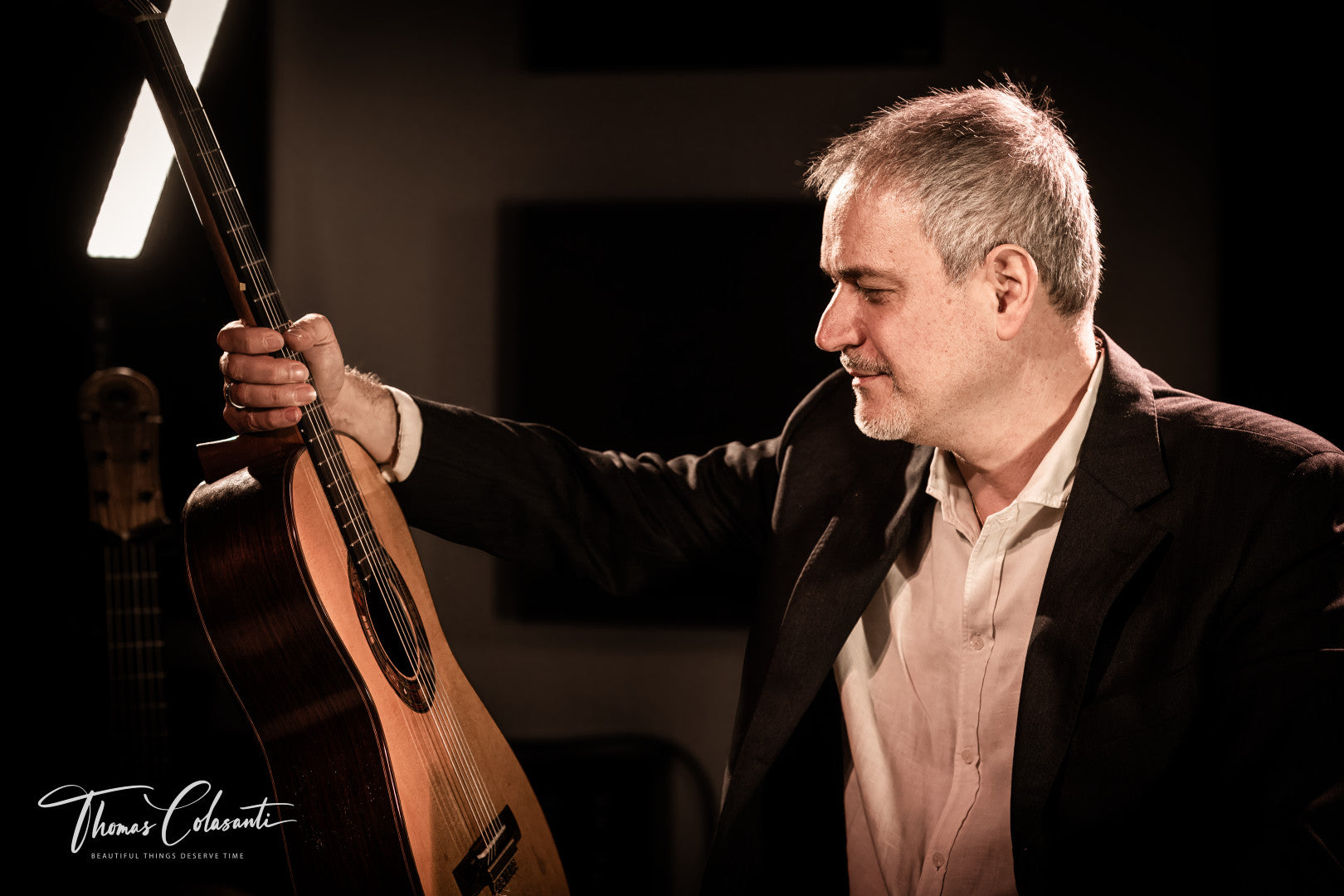
Gabriele Curciotti
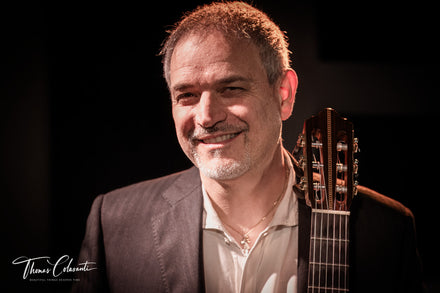
Concertista classico. Fisioterapista specializzato in riabilitazione neuromotoria.
- Diplomato in chitarra classica, Conservatorio 2003
- Laureato in Fisioterapia, specializzazione in riabilitazione neuromotoria
- Esperienza ospedaliera su pazienti in riabilitazione neuromotoria, prima di tornare alla chitarra a tempo pieno
- Concertista attivo, collaborazioni con teatri e festival italiani
- L'unico docente che unisce fisioterapia e chitarra classica in un metodo strutturato
14 lezioni lezione con un musicista fisioterapista
Regia da musicisti, non da videomaker
4K multicamera.
Le inquadrature le scelgono videomaker professionisti che sono sempre anche musicisti.
Vedi dove si muove il busto, dove arriva il braccio, come cambia l'angolo della spalla tra un passaggio e l'altro.
Booklet con partiture
La musica sempre al centro.
Per questo nel corso sono affrontati brani classici di cui vi offriamo la trascrizione professionale, così da avere sempre sott'occhio cosa si studia mentre si corregge la propria postura.
Il corso è tuo. Punto.
Nessun abbonamento. Nessuna scadenza. Nessun "accedi entro 12 mesi".
L'86% dei nostri studenti completa i corsi perché vanno al loro passo e portano a risultati concreti.
Quanto vale quello che stai per ottenere
Facciamo i conti.
Booklet PDF
Bascule, diagonali, raggio d'azione, tabella di scelta del poggiapiede.
Stampalo e tienilo sul leggio mentre studi. Un complemento necessario al metodo, non un "bonus".
30 giorni. Se non fa per te, ti rimborsiamo.
Nessun modulo, nessuna giustificazione. Scrivi al supporto, ti restituiamo tutto. Lo facciamo perché l'86% di chi inizia i nostri corsi li finisce. Sappiamo che funzionano.
Domande frequenti
Preferisci il fingerstyle acustico?
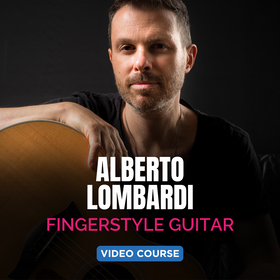
START FINGERSTYLE TODAY - Alberto Lombardi
Inizia a suonare fingerstyle in modo completo, musicale e immediato. Impara a combinare melodia, accordi e ritmo con un metodo chiaro, pratico e progressivo. Costruisci indipendenza tra pollice e dita, sviluppa groove e dinamica, e porta a casa brani veri da suonare da solo con la tua acustica.
€119
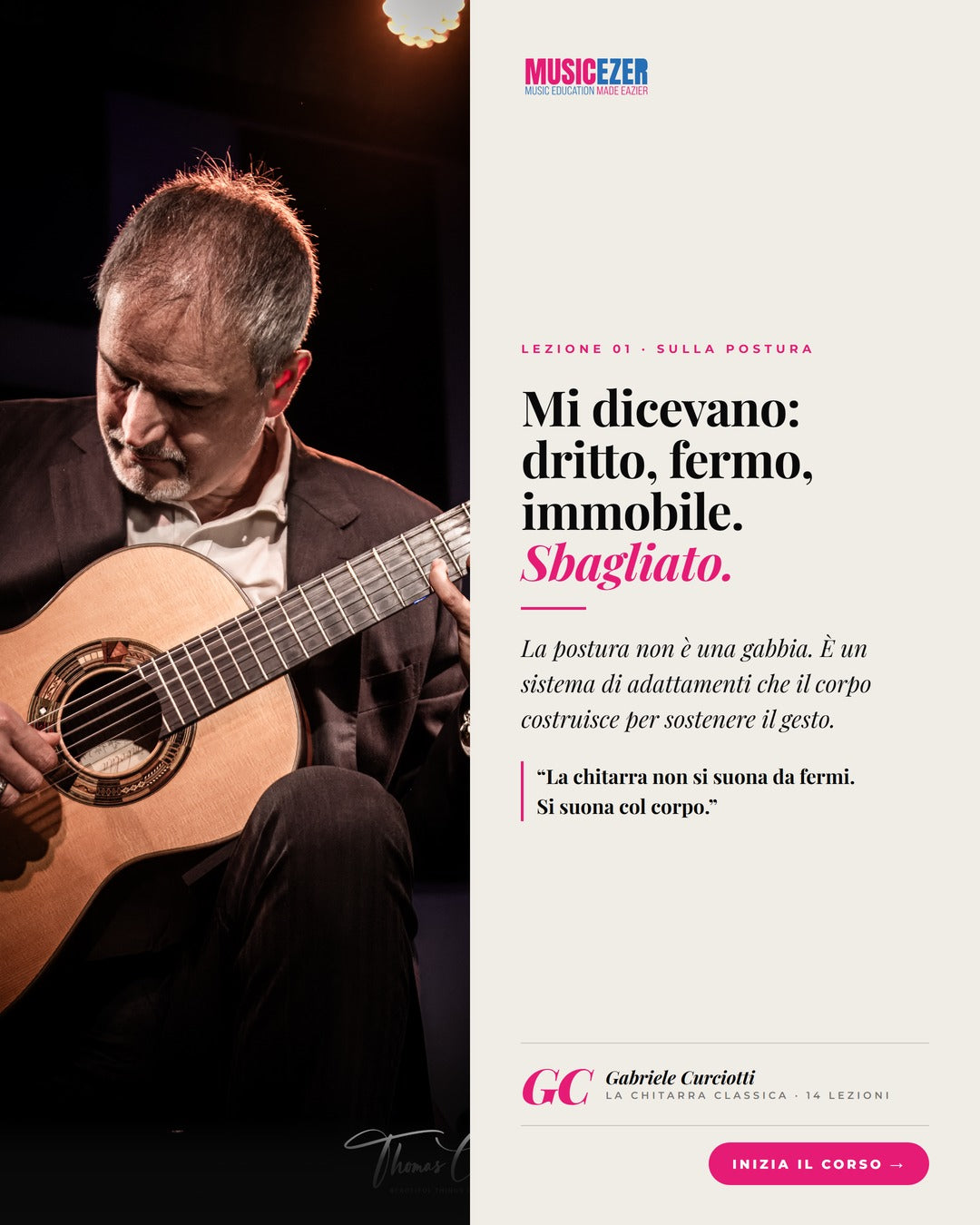
Yesterday that classical guitar passage was clean. Today it won't be. Gabriele Curciotti teaches you to watch your hand, not the notes. Your little finger twists to reach the string. The movement went wrong at the arm.
Forward-and-back tilt, and diagonals: that is what he calls the arm's work, words he brought from physiotherapy, which he trained in as well as at the conservatory. Over 14 lessons you put posture, touch, vibrato and tremolo back in order, the last on Recuerdos de la Alhambra. He teaches in Italian and offers no shortcuts: practice is what it takes.
For the jazz or pop player who stiffens the moment the strings are nylon.